Where to Buy Your First Goshuin Book—and What to Do with Separate Sheets
A cover woven with stars and dragons, or a book bearing the name of a temple you have just visited: choosing a goshuincho can be part of the visit itself. Look at the temple or shrine's reception office, or browse stationery and Japanese-goods shops before setting out. Buying a book at your first stop and receiving its first inscription there is a straightforward way to begin.
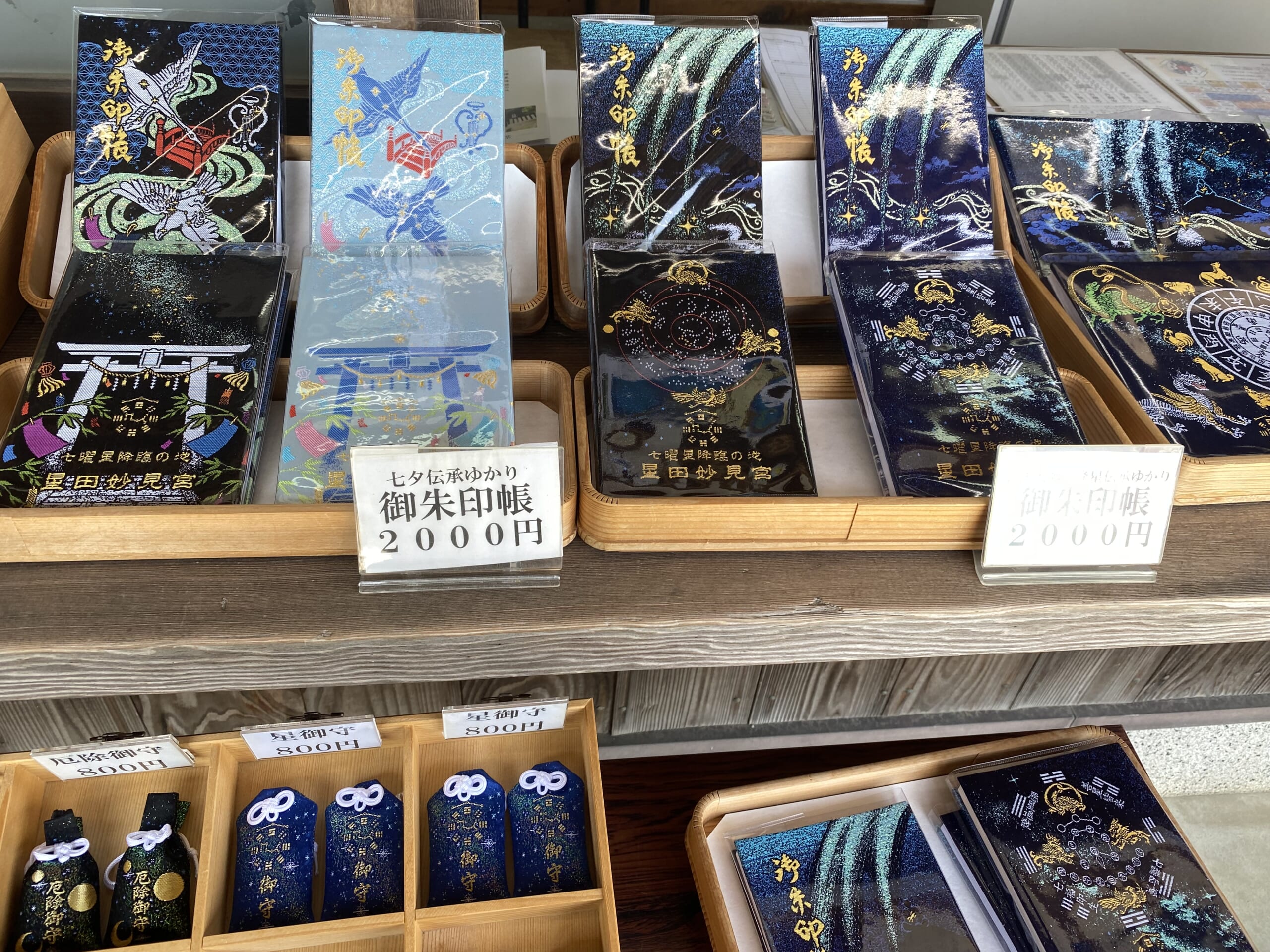
A goshuin is an ink inscription or seal received as a record of worship. Once a cover catches your eye, take a look at the place it comes from and how its reception works, too.
Written in your book, or given on a separate sheet?
Jikagaki means an inscription written directly into your book. Kakioki means receiving it on a separate piece of paper. The arrangement depends on the site, the particular goshuin and the date.
Chichibu Shrine, for example, lists its regular goshuin at ¥500 in either format, with the same design. During its annual festival period, December 1–6, it offers only printed separate sheets. Bringing a book does not, by itself, mean a direct inscription will be available.
If that is what you want, read the site's reception information before choosing your visiting date. If separate sheets appeal to you, look for a book that can hold them. Knowing which you need makes the conversation at the counter much easier.
Look inside the book as well as at its cover
Before buying, ask to see the paper and how the book opens. Useful questions include:
- Is this a book for inscriptions written directly onto the pages?
- Can I use it to keep separate goshuin sheets?
- Do you have one that holds a double-page sheet without folding it?
If you already have a sheet, give the seller its dimensions. The book's outer measurements do not necessarily tell you what fits inside. Rather than cutting or folding a large sheet on the spot, protect it in a firm document folder until you can choose suitable storage.
The cover can also lead you into the site's story. Hoshida Myokengu, whose books appear in the photograph, explains its connections with stars and Tanabata in its official goshuin information. Reading about the motif gives the book a connection to the place, beyond its appearance. Choose from the designs and offerings available when you visit.
At reception, open the page you want used
Worship first, then go to the goshuin counter. For a direct inscription, hand over the book open to the page you would like used. Reception hours need not match the grounds' opening hours, so leave time before your train or bus.
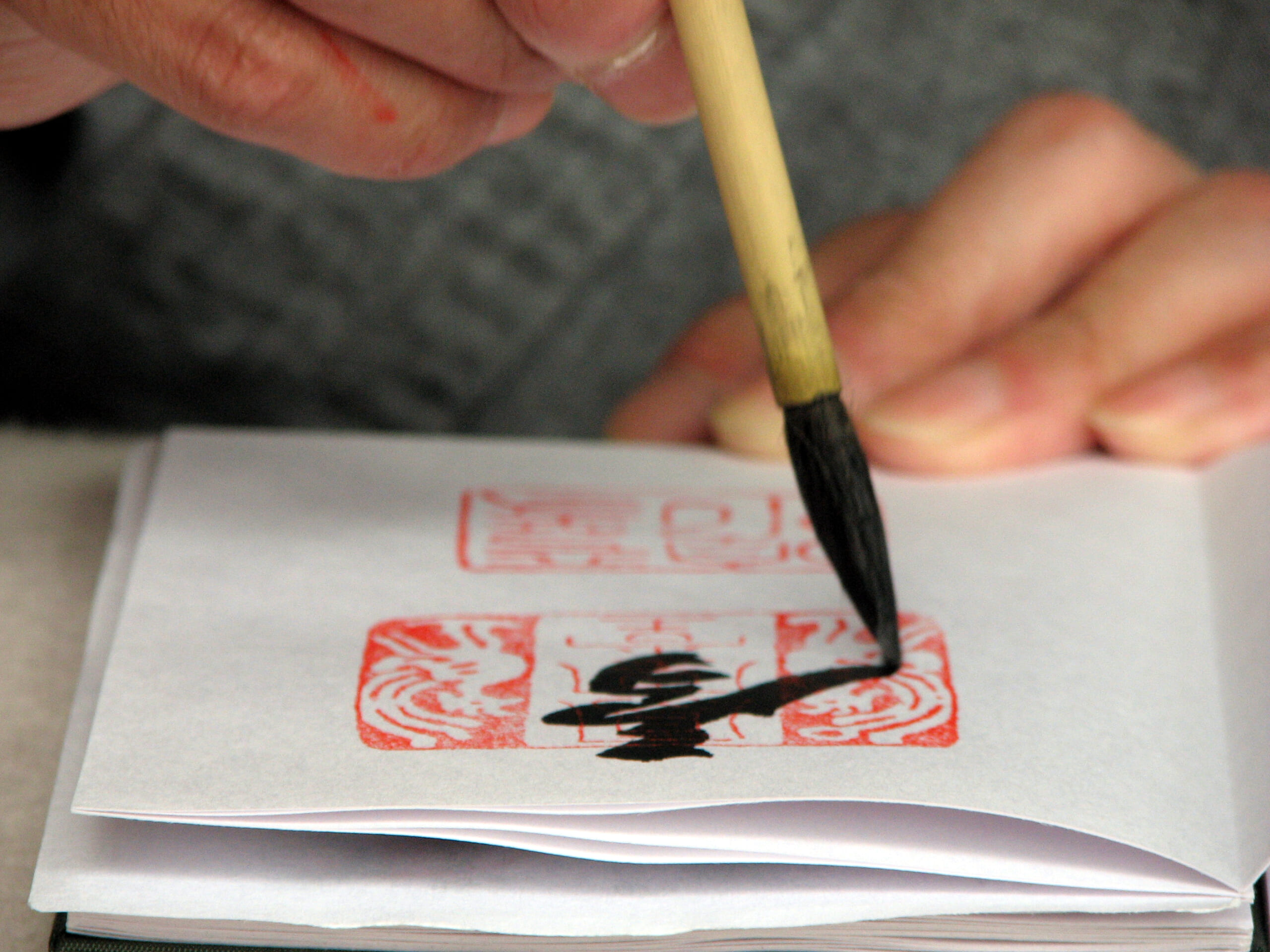
On busy days, you may be asked to leave the book and collect it later. Keep any collection token, and ask where and when to return before walking around the grounds. Do not head off to your next sightseeing stop while the book is still at reception.
JNTO advises keeping ordinary sightseeing stamps out of a goshuin book. If you also enjoy station stamps, bring a separate notebook. For a first temple or shrine visit, TORII's guide to worship and visiting in Nara explains some of the practices you may encounter.
If you cannot read the calligraphy, keep the site's name in a separate note. Later, it will help turn the page back into a place you remember walking through.
Information checked: October 17, 2026. JNTO: goshuin and goshuincho, Chichibu Shrine: regular offerings and festival arrangements, Hoshida Myokengu: goshuin.
Photo credits
- Immanuelle · CC BY 4.0 · 2024-05-26 · Unedited; resized by WordPress
- Chris Gladis (MShades) · CC BY 2.0 · 2006-05-26 · Unedited; resized by WordPress

