Buying a Furoshiki: Choose a Cloth for What You Will Wrap
A furoshiki looks different spread flat and tied around an object. Once a pattern catches your eye, choose one thing you would like to wrap. That turns an attractive souvenir into a cloth with a life after the trip.
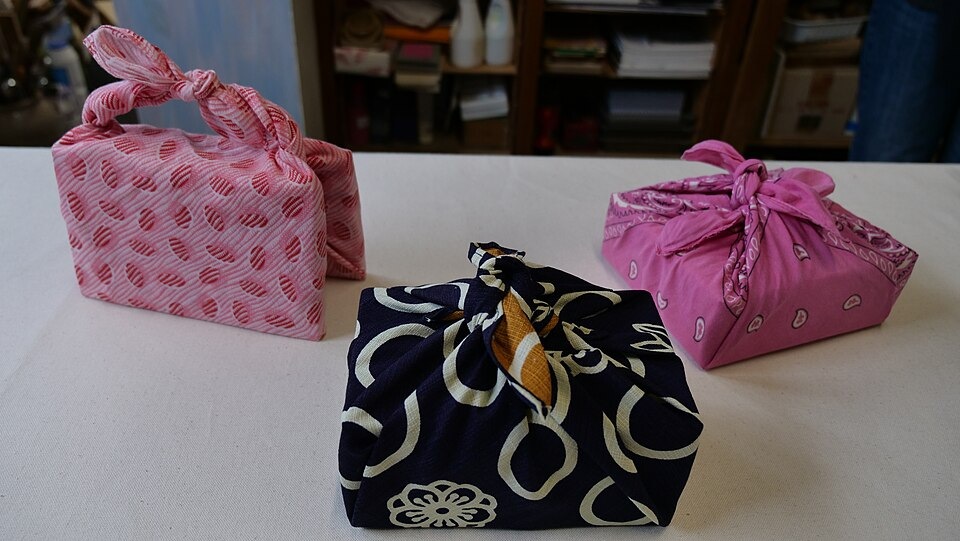
Match the size to the object
| Approximate side length | Typical use | When wrapping |
|---|---|---|
| 50 cm | Lunch box or small gift | Place the object diagonally and leave the corners free for knots. |
| 70 cm | Box of sweets or a wine bottle | Allow for the object’s depth and test whether the corners reach. |
| 100 cm | Bag shapes or clothing | Try the filled shape and check the length left for handles and knots. |
The squares compare relative cloth sizes. The centre shows an object, leaving corners available for tying. A deeper box uses more of the cloth before the corners meet.
See the maker’s size and wrapping examples. Do not fill the fabric right to its edges: the corners need room to tie.
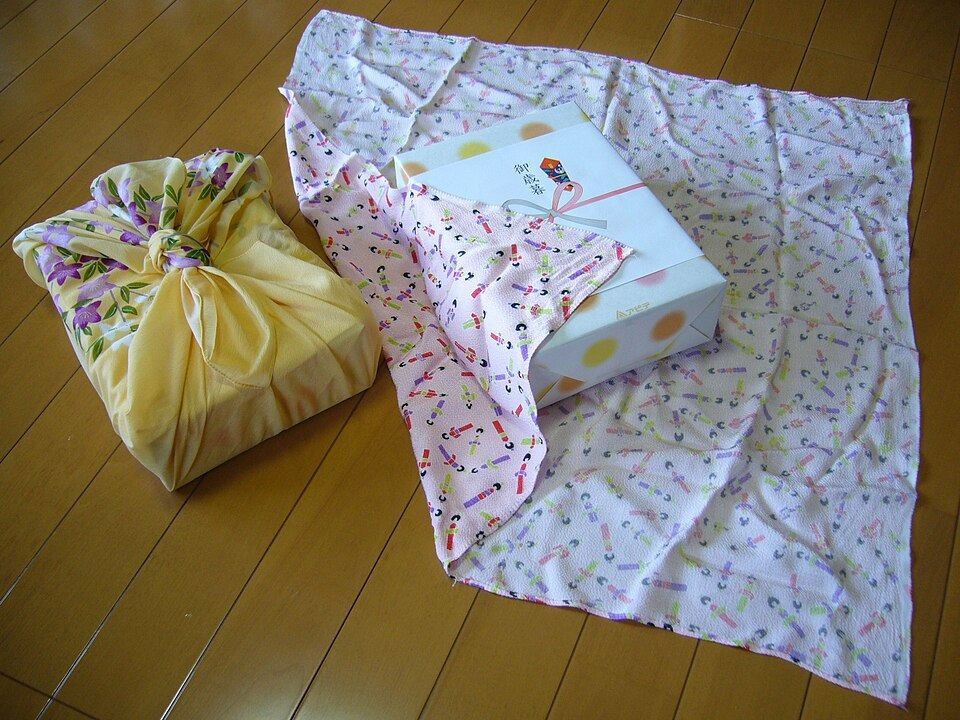
If you have the object with you, a shop demonstration makes the size choice more concrete. Even describing your hand luggage gives you a practical criterion beyond the pattern.
Feel the fabric as well as looking at it
A glossy cloth is not necessarily washable
Read the fibre label before choosing a cloth for frequent use. Musubi’s care guide distinguishes cotton and polyester, which can be washed at home, from silk and rayon, for which it specifies dry cleaning because water can cause shrinkage. It recommends hand washing cotton and washing coloured pieces separately.
Do not treat rayon and polyester as interchangeable simply because both may have a sheen. These are the maker’s material examples; follow the care label on the particular cloth, including any blend or special finish. Feel a tied corner in the shop, and keep the care information when giving the cloth as a gift.
See how the pattern looks when tied
A large design can be striking when open but only partly visible when wrapped. Smaller repeating patterns may be easier to picture in several arrangements. Compare a wrapping example with the open cloth if the shop has both.
For an everyday souvenir, one favourite pattern and one intended use are a good start. If you are deciding between cloth types, compare choosing a tenugui before settling on your gift.
Practical visitor information checked: 5 October 2026.
Information checked: October 3, 2026.
Official sources
Photo credits
- Furoshiki, traditional japanese wrapping technique with cloths (1).jpg — Culture Japon, CC BY-SA 4.0 / 2022-12-08 14:44:06. Resized only.
- Traditional Japanese wrapping cloth,huroshiki,katori-city,japan.JPG — katorisi, CC BY 3.0 / 9 December 2007, 08:20:41 (according to Exif data). Resized only.
.jpg)

Structure and selected guidance updated: October 13, 2026.