Your first Gion Matsuri: choosing between the procession and Yoiyama
For floats moving through the streets, choose the procession. For decorated floats and festival music, choose Yoiyama. At Gion Matsuri, what you want to see determines when to visit. The Saki Matsuri and Ato Matsuri also run on separate dates, so decide on your event before booking accommodation and transport.
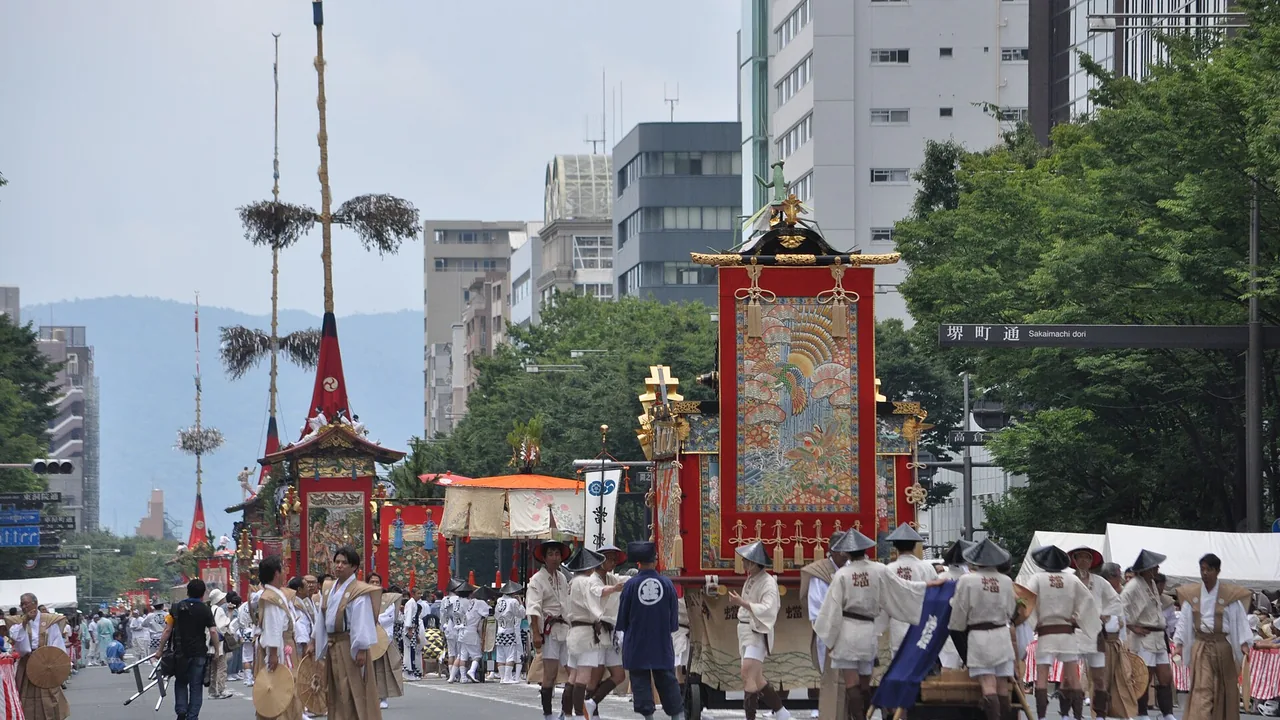
Dates and highlights of the two festival stages
| Event | Usual dates | What to see |
|---|---|---|
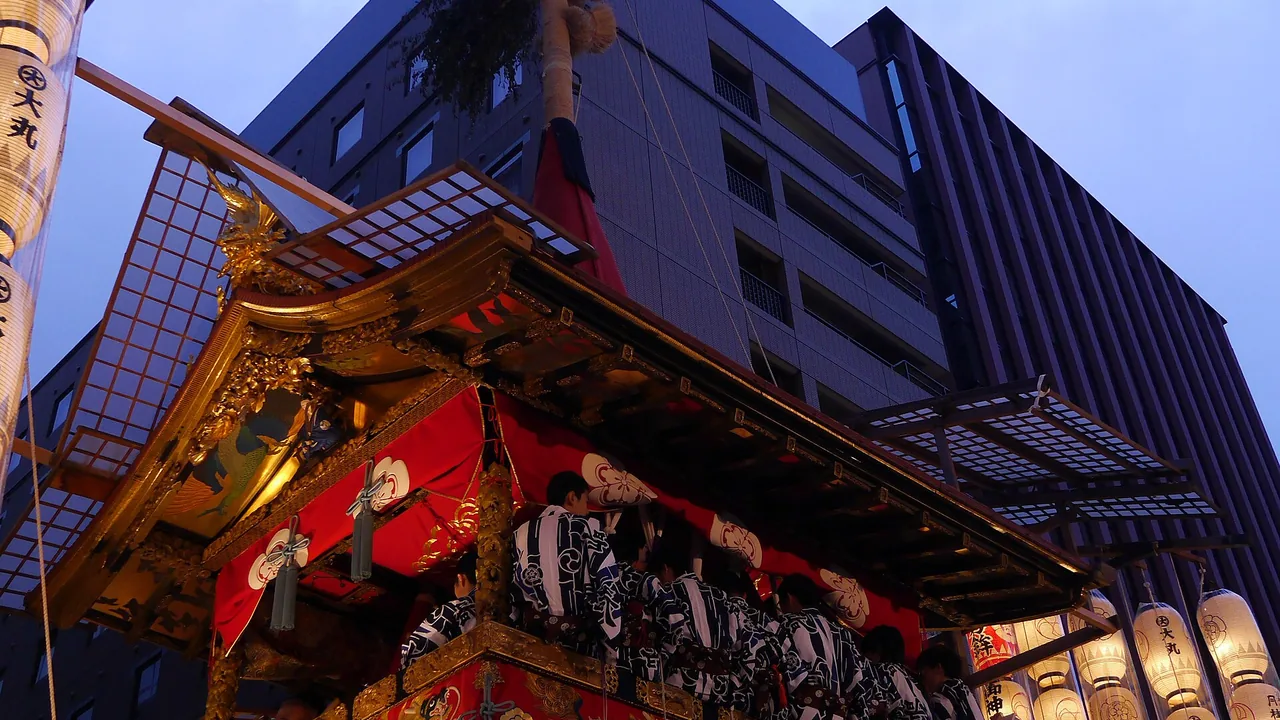
| Saki Matsuri Yoiyama | July 14–16 | Decorated floats and music in the float neighbourhoods |
| Saki Matsuri procession | July 17 | Floats moving through the streets from the morning |
| Ato Matsuri Yoiyama | July 21–23 | The Ato Matsuri float neighbourhoods |
| Ato Matsuri procession | July 24 | A separate procession from the Saki Matsuri |
This overview follows Kyoto City’s usual schedule. Dates, times and restrictions can change, so use the guidance for the year you visit. Traffic controls and food-stall arrangements also differ between the two Yoiyama stages. Before booking, check that year’s viewing-seat sales and traffic information.
Choose the event, then pin its location
Do not use the Gion district or Yasaka Shrine as your only destination for seeing the floats. JNTO identifies streets including Shijo, Kawaramachi and Oike as festival settings. The useful map depends on the event:
- Yoiyama: find the displayed floats on the current year’s float-location map for the stage you chose.
- Procession: choose a place on that year’s procession route, then check access and traffic restrictions.
Save the relevant map and a route back to your accommodation. A pin for “Gion” alone does not tell you where to watch your chosen float event.
Agree on a meeting point before Yoiyama
Subway stations and major junctions fill up from late afternoon. Agree on a meeting point in case your group separates. Follow staff directions near the floats, stay out of the roadway and do not block townhouse entrances.
Expect sun at the procession and crowds at Yoiyama
The procession means daytime heat and standing; Yoiyama means evening crowds. Paid viewing seats do not necessarily provide shade. Bring water and plan somewhere to rest and a route back.
With children or older travellers, stay within easy reach of stations and rest stops rather than insisting on getting right beside a float. Do not force a stroller through dense crowds. Watch from farther away or shorten your visit to suit your companions.
Read the rain policy before buying a viewing seat
Find the current year’s sales page through Kyoto City’s official Gion Matsuri guide. Read arrival times, admission procedures and rain arrangements before paying. Check the official event schedule and procession routes together with that year’s Kyoto Prefectural Police traffic restrictions.
Read next
Walking through Gion in the morning
Information last checked: September 22, 2026
Official sources: Kyoto City Tourism: Gion Matsuri / Kyoto Prefectural Police: temporary traffic restrictions
Last edited: September 28, 2026. Official source checked for this update: Kyoto City: Gion Matsuri schedule and procession routes
Photo credits
A float in Kyoto’s Gion Matsuri procession — 江戸村のとくぞう · Photo source · CC BY-SA 4.0 (Display may use cropping or brightness adjustments.)

A Gion Matsuri float illuminated by lanterns at night — Hahifuheho · Photo source · CC0 (Display may use cropping or brightness adjustments.)

Structure and selected guidance updated: October 12, 2026.