Buying a Knife in Kappabashi: Your First Blade, Budget and Flight Home
Before stepping into a knife shop in Kappabashi, think about what you cook and how much care you will give the blade. A knife chosen for your kitchen is more likely to stay useful than one bought mainly for its pattern or presentation box.
Start with the meals you make
For one knife to handle meat and vegetables, begin by discussing a santoku or gyuto. A longer blade suits some cooks; a smaller knife may work better on your cutting board. Compare weight and balance in your hand, not just blade length.
A yanagiba for slicing fish or a nakiri for vegetables becomes more appealing when you have a clear use for it. Single-bevel knives also involve handedness and a different sharpening approach. Ask how you would use and maintain the shape that catches your eye.
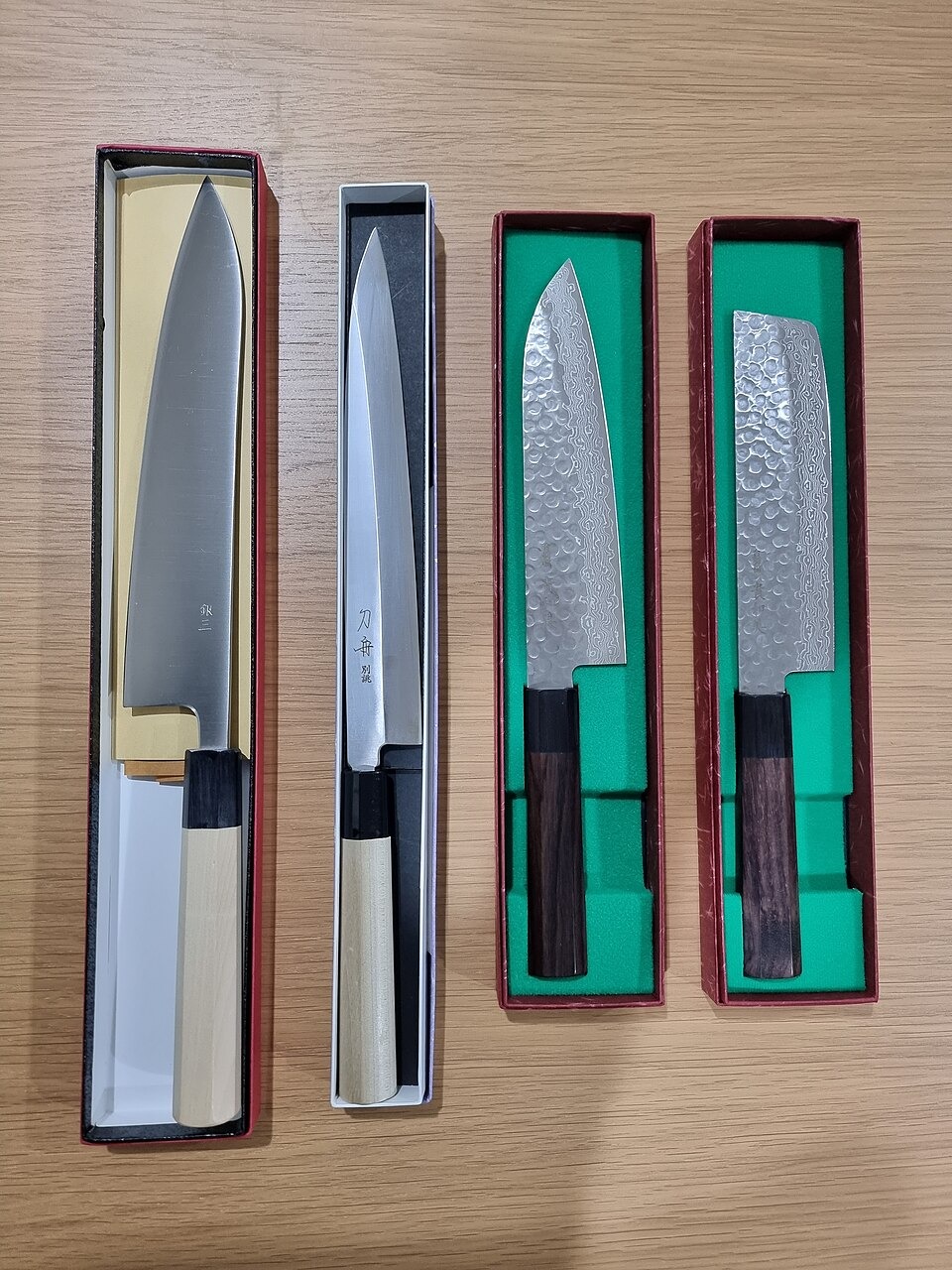
The knives shown are, from left to right, a gyuto, yanagiba, santoku and nakiri, all purchased in Kappabashi. The photograph helps distinguish the shapes; handling the actual knife is a better way to choose your size.
Choose care you can keep up with
Discuss carbon steel and stainless steel in terms of your washing and storage routine, not appearance alone. Stainless steel does not mean you can put a knife away dirty or wet.
Tojiro’s care guidance recommends washing with neutral detergent and a soft sponge, then wiping away moisture and drying the knife. It also advises against using a dishwasher. Take home the instructions for the product you buy, and ask about sharpening tools and repairs that will be practical where you live.
Set a budget by comparing actual products
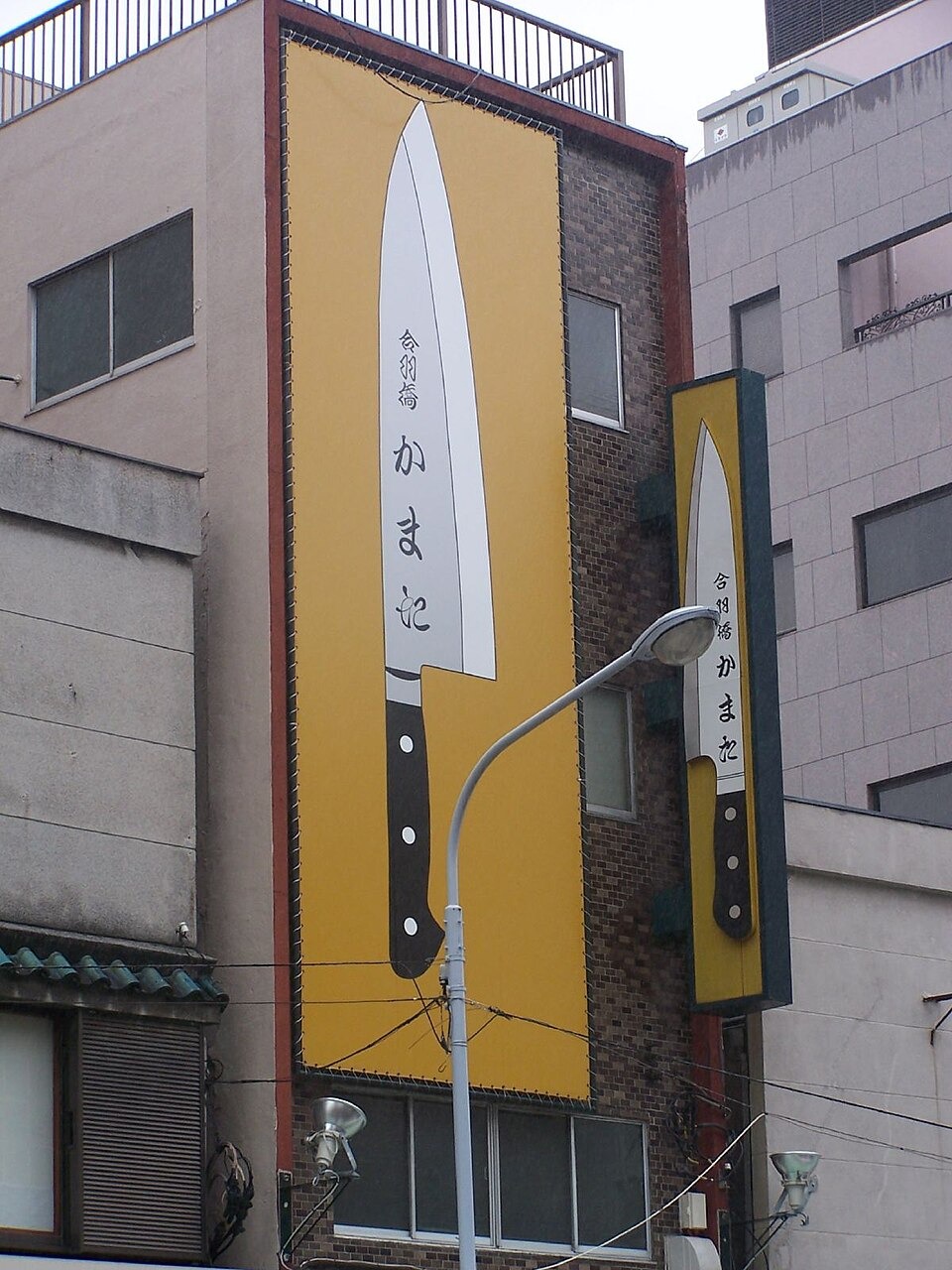
Kamata’s Japanese online shop lists tax-inclusive examples including a VG10 color-handled santoku at ¥14,800 and a V10N1 Damascus santoku at ¥23,000. These are product examples at the time of research, not an average price for Kappabashi. Steel, handles and finish change the price.
Give the staff a budget and compare a few knives within it. For engraving, agree on the wording and collection time before ordering. Kamata advertises free engraving; services vary by shop and product.
Leave time for the knife shop
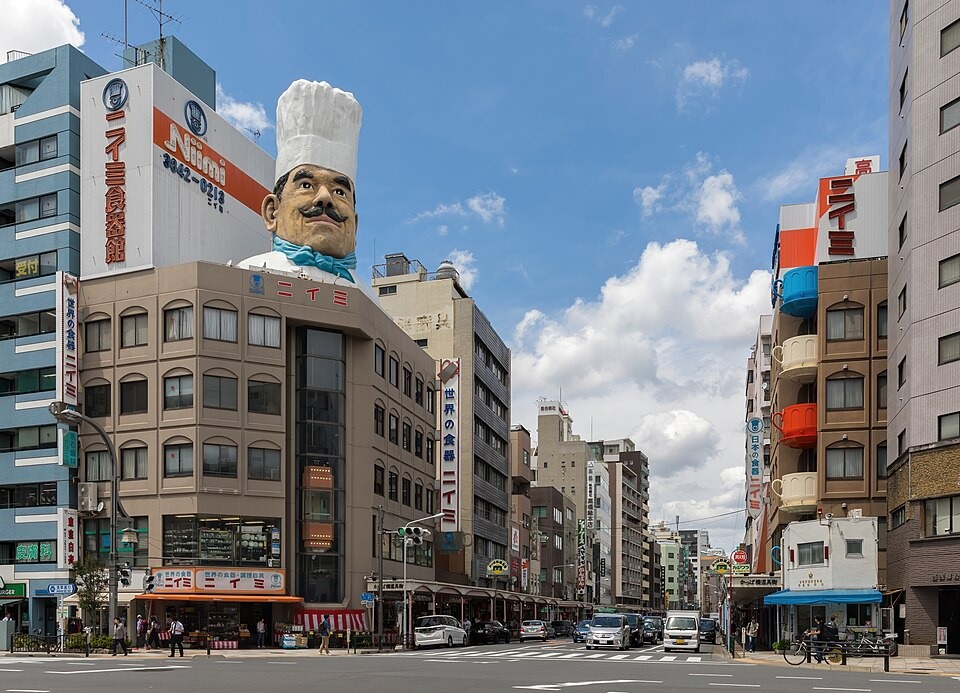
Kappabashi is about a five-minute walk from Tawaramachi Station on the Tokyo Metro Ginza Line. The giant chef sculpture marks the street’s southern entrance, with tableware and cooking-equipment shops alongside knife retailers. It is easy to spend your time browsing, so save room for a proper conversation and any engraving.
Hours and payment methods vary. Kamata lists 10am–6pm opening, including Sundays and holidays, and accepts credit cards but not debit cards or electronic money. Do not assume the same arrangements at another shop; look up the retailer you intend to visit.
Pack it for checked luggage
A kitchen knife belongs in checked baggage, not your cabin bag. ANA’s international-flight guidance lists knives among prohibited cabin items and directs passengers to check them in. Ask the shop for a box and protection for the blade so the edge cannot protrude during transport.
For an international journey, check your airline as well as the rules for transit and your destination. If your ticket has no checked-baggage allowance, include the added luggage cost before buying. The right purchase should still make sense once you have paid to get it home.
Information checked: October 2, 2026.
Official sources
Photo credits
- Kappabashi-dori streetcorner (Kitchen town – southern end) Tokyo Japan.jpg — Basile Morin, CC BY-SA 4.0 / Taken on 14 June 2019, 10:57:10. Resized.
- Gyuto, yanagiba, santoku, and nakiri.jpg — Benlisquare, CC BY-SA 4.0 / 2024-09-01. Resized.
- Kitchen knives store by Photocapy in Kappa-bashi, Tokyo.jpg — Photocapy from Kitchen knives' store Kappa-Bashi Kamata Hakensha at Kappabashi-dori, Matsugaya, Taito, Tokyo, CC BY-SA 2.0 / January 2, 2024 (2004 ?). Resized.
_Tokyo_Japan.jpg)

