Osaka or Hiroshima Okonomiyaki? Two Ways to Enjoy the Same Favourite
Waiting beside a hot griddle, with the smell of sauce in the air, is part of an okonomiyaki meal. Osaka and Hiroshima use the same name for noticeably different preparations. The main difference is how the ingredients are cooked: mixed together or built up in layers.
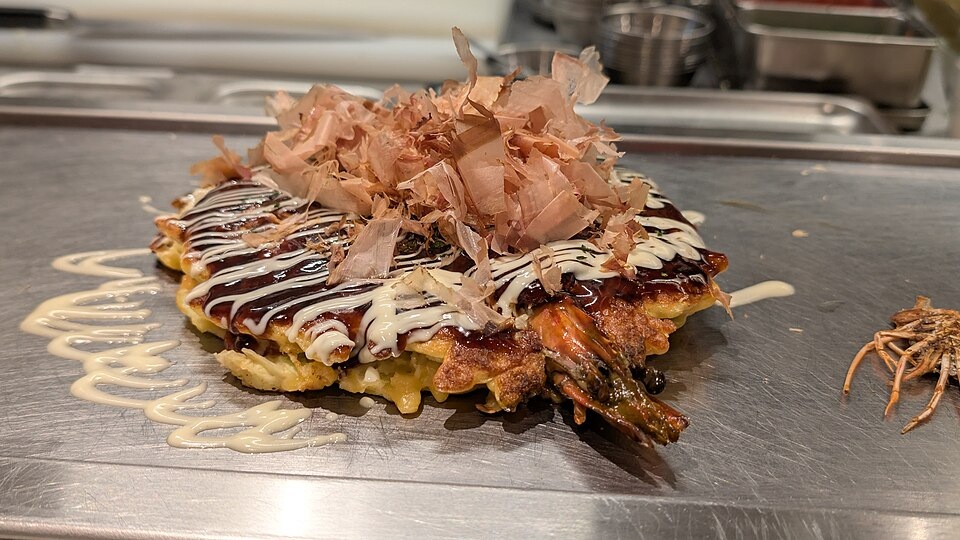
Osaka: the ingredients become one pancake
These are representative styles. Fillings, noodles and finishing vary by restaurant and region. Who cooks it and which utensils you use do not divide neatly into two regional rules.
| Feature | Typical Osaka style | Typical Hiroshima style |
|---|---|---|
| Batter and fillings | Mixed together, then cooked as one pancake | Layered over a thin base |
| Noodles | Not essential to the basic style | Noodles such as soba or udon are a characteristic layer |
| Egg | Often part of the batter; recipes differ | Combined with the noodles and other layers towards the finish |
| Who cooks | The restaurant or the customer, depending on the shop | Follow the restaurant’s cooking arrangement |
| Eating | Plate, chopsticks or spatula according to the shop and your comfort | Use utensils and a plate with care around the hot griddle |
Osaka’s representative style mixes batter with cabbage and other ingredients before cooking. The mixture comes together as one pancake, with toppings and fillings giving you choices.
Start with a basic item on the shop’s menu. Choose an ingredient you can eat, such as pork, rather than adding every extra. Differences in sauce and finishing touches give you something to notice if you try another shop later.
Hiroshima: watch the layers come together
A typical Hiroshima preparation begins with a thin round of batter, with cabbage and other ingredients layered above it and combined with noodles and egg. The construction is visible while it cooks. Watching the cabbage soften tells you more about the difference than the finished plate alone.
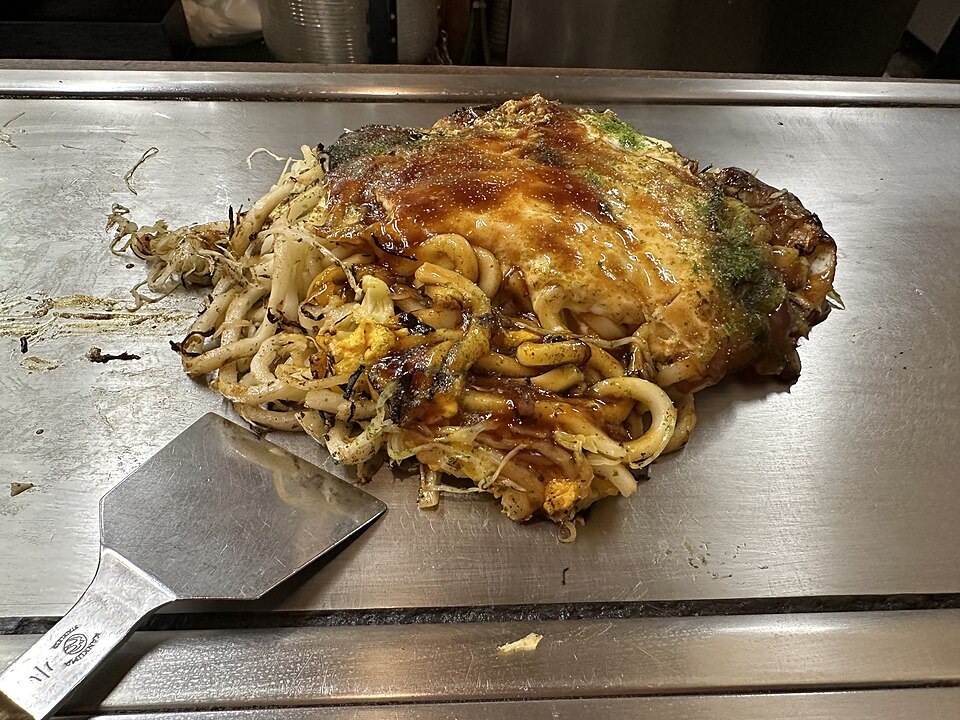
Noodles and fillings vary by shop and locality. Read the soba or udon choices on the menu rather than expecting every Hiroshima pancake to be identical. If noodles are included, consider what other meals you have planned before adding more food.
Who does the cooking?
A griddle at your table does not necessarily mean you cook the food yourself. Follow the shop’s explanation and leave a staff-prepared dish alone while it is being finished. Once ready, cut manageable pieces and take care around the hot surface and utensils.
There is no need to imitate someone eating with a small spatula. Use the chopsticks and plate as the shop explains, and concentrate on the food.
Give each style its own meal: an Osaka pancake in Osaka, a Hiroshima one in Hiroshima. The cooking is part of the comparison, not just the first bite.
Practical visitor information checked: 5 October 2026.
Information checked: October 3, 2026.
Official sources
Photo credits
- Okonomiyaki -a Japanese savory pancake in Osaka, Japan.jpg — Joli Rumi, CC BY-SA 4.0 / 2025-11-08 20:17:11. Resized only.
- 広島風お好み焼き2024-1.jpg — ノボホショコロトソ, CC BY 4.0 / 2024-03-29 20:36:23. Resized only.

