Senjogahara in autumn: a half-day walk from Akanuma, with a way back
Autumn at Senjogahara colours the grassland as well as the trees. For an open-sky walk, Akanuma makes a useful starting point. Before you set out, choose a shorter walk returning to Akanuma or a longer route through to Yudaki, and plan the bus home around that choice.
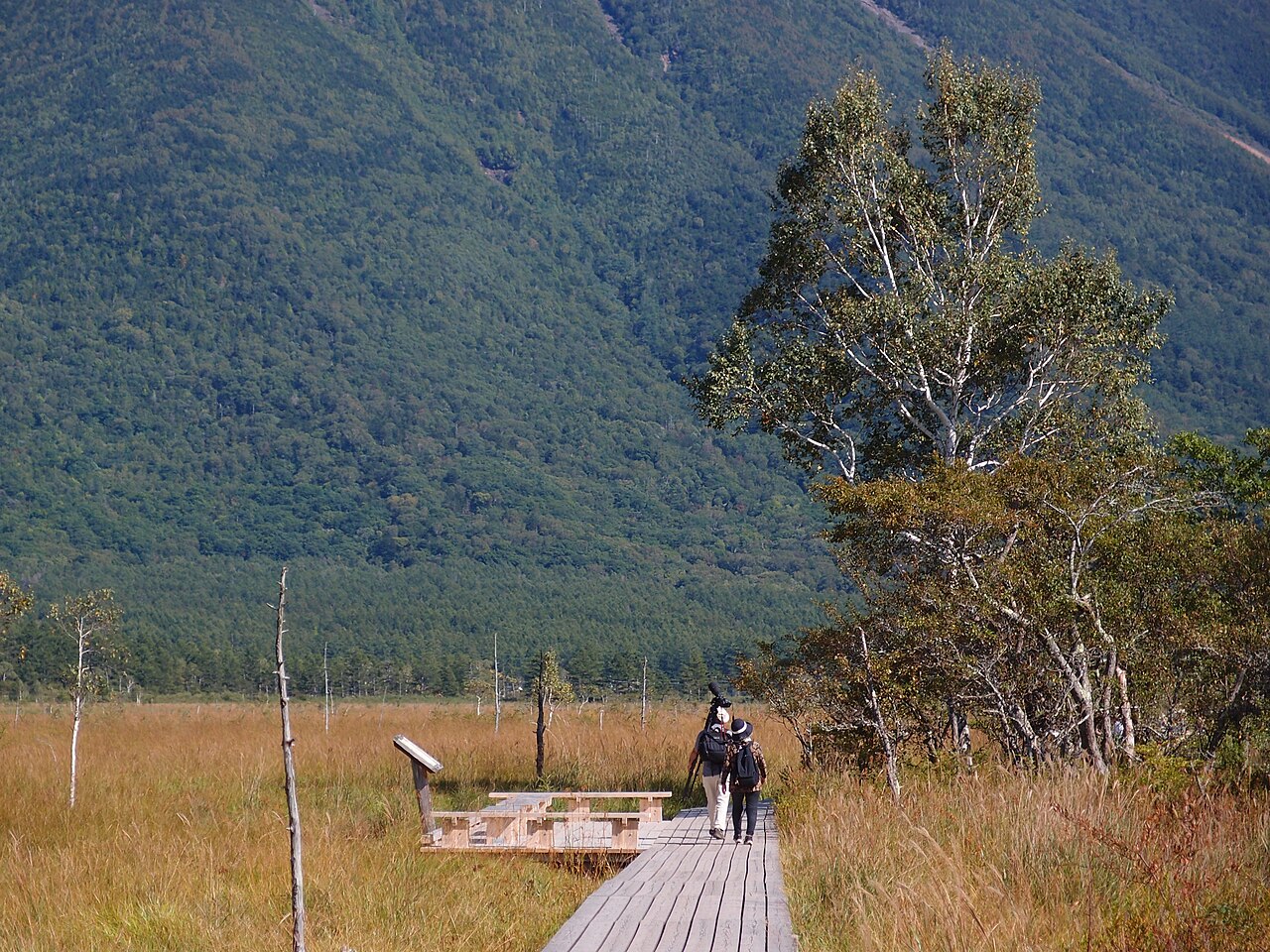
The grass colours earlier than the lakeside trees
At roughly 1,400 metres above sea level, Senjogahara’s grass usually changes colour from late September to early October. That is a seasonal guide, not a report of today’s conditions; the surrounding woodland and lakeshore follow different patterns. Use Nikko Tourism Association’s foliage information to compare the areas for your travel date.
Arriving with plenty of daylight gives you more room to stop for photographs. The route includes woodland as well as exposed wetland boardwalk, and rain or cold weather changes how the walk feels underfoot.
A manageable first walk: Akanuma to the viewing deck and back
Akanuma has toilets and a place to get local nature information. The tourism association’s route guide gives about five minutes to the junction, then about 25 minutes to Watasuge Deck. Returning along the same route makes roughly an hour of walking, before photo stops and rests.
The out-and-back option lets you turn around when someone gets cold or tired. It is easier to adapt with children or a later arrival than a through-route with a different bus stop at the end.
For a briefer view, consider Sanbonmatsu’s observation point instead. Viewing the marsh there is not the same outing as walking in from Akanuma: choose your bus stop according to the experience you want.
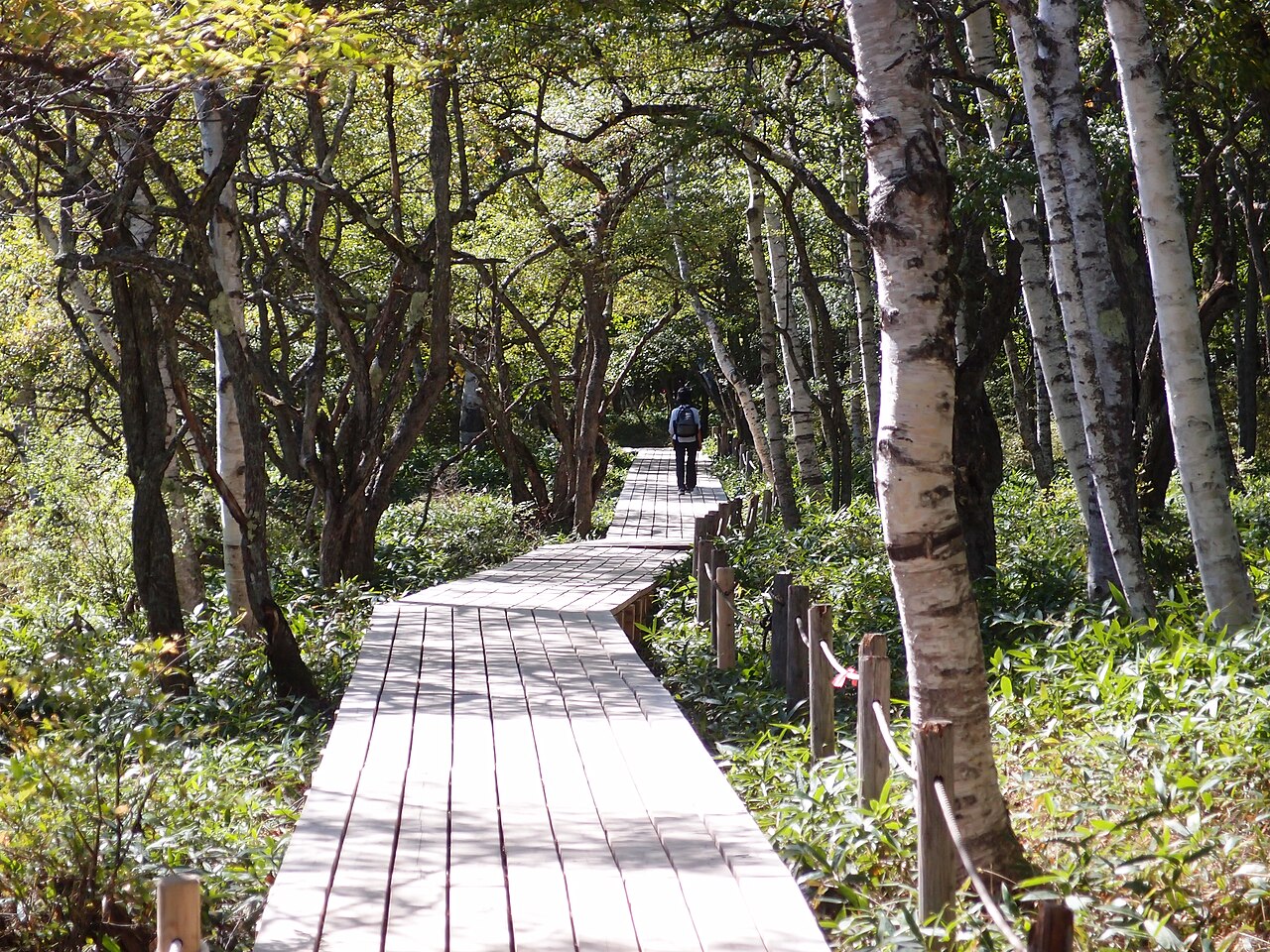
Through to Yudaki: allow more than the walking time
The official route estimate from Akanuma to Yudaki is about one hour 45 minutes, without breaks. For a relaxed half-day outing, our planning suggestion is to leave two to three hours for the walk, then add bus waiting and travel separately. Beyond Aoki Bridge there are earth paths and changes in level; this is not one continuous flat boardwalk.
The eastern path between Yudaki Rest House and Kotaki is scheduled to be closed for works from August 18, 2026 until the end of March 2027. The latest Nikko Yumoto Visitor Center notice says the diversion by Yudaki’s viewing deck allows passage through towards Senjogahara. Open the works and diversion notice before leaving and follow the signs on site rather than an older route map.
The walk ends at your bus stop, not the waterfall
Reaching the foot of Yudaki does not put you at the bus stop for Nikko. For a through-walk, match the walking route to the bus map and locate your chosen return stop, such as Yutaki-iriguchi, before setting off. Returning to Akanuma is simpler to organise because you finish where you began.
Use Tobu’s Nikko timetable to choose a station-bound service in advance. Autumn traffic means a scheduled bus arrival is not enough on its own to plan a tight train connection. If you also want lakeside sightseeing, our Nikko day-trip guide helps keep the day within a workable area.
Dress for wet boards and pauses in the wind
Bring familiar shoes with grip, rain protection and a warm layer. Walking can keep you comfortable until you stop for a photograph. Carry water and something to eat before entering the trail.
Use toilets at route ends such as Akanuma or Yudaki, checking seasonal closure notices. Stay on the boardwalk when taking photographs to protect the vegetation. Even after the strongest grass colour has passed, the open sky, mountains and woodland still give the walk its character.
Official information
Information checked: October 10, 2026.
- Nikko Tourism Association: Oku-Nikko routes and walking times
- Nikko Tourism Association: autumn foliage information
- Nikko Yumoto Visitor Center: Yudaki–Kotaki works and diversion
- Tobu Bus: Nikko area
Photo credits
- Guilhem Vellut · CC BY 2.0 · 2013-09-18 · License
- Guilhem Vellut · CC BY 2.0 · 2013-09-18 · License
.jpg)
.jpg)