Shirakawa-go in Winter: Snow, Viewpoints, Clothing and Bus Access
For a winter day in Shirakawa-go, settle your return bus and pack waterproof shoes with good grip first. Leave time for the village lanes and a warm meal, not just the photograph from above.
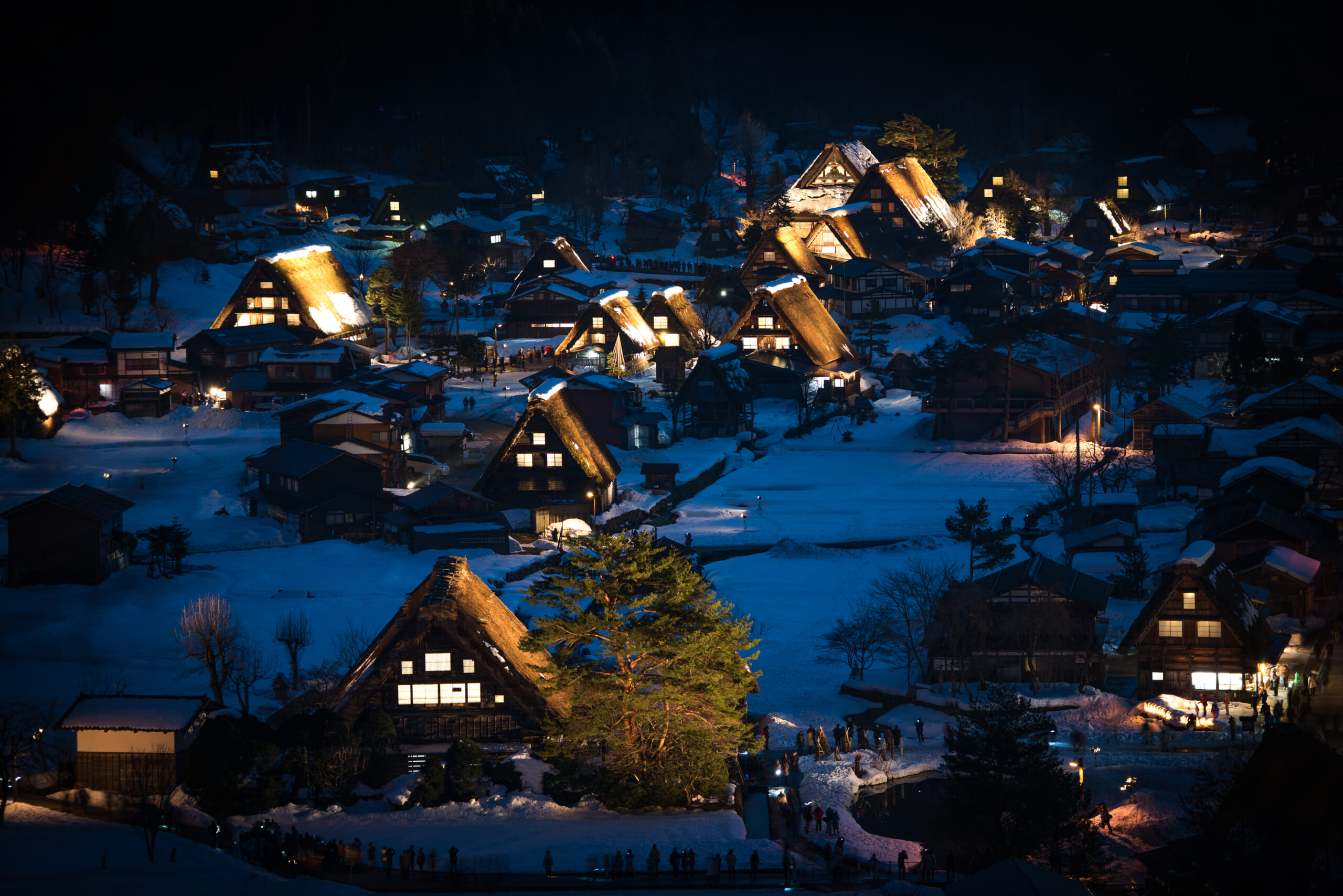
The opening photograph shows a winter light-up event, not the village’s nightly appearance. See advance reservations and viewpoint tickets before planning an evening visit.
The tourism association describes late December through late February as the period when snow cover has tended to remain in recent years. Use it as a planning window, then look at the forecast and local live camera before travelling.
Let the outward and return buses define the day
Buses serve Shirakawa-go from Takayama and Kanazawa, among other places. Nohi Bus gives an approximate journey of 50 minutes from Takayama Nohi Bus Center. Winter roads can affect travel, so leave room before any onward train or flight.
Reservation requirements differ by service. Secure the return as well as the outward journey; the gap between them is your village time. Check the operator’s announcements for travel-day disruptions.
A night in Takayama or Kanazawa separates the visit from a longer journey from Tokyo or Kyoto. Staying in Shirakawa-go itself means checking whether the lodging is in Ogimachi or another district, since that changes the local transfer. Drivers need winter tyres. If snow driving is unfamiliar, compare public transport and organised tours too.
On arrival, decide where the viewpoint fits
Looking down over the roofs and walking beneath them give different views of the village. At the bus terminal, find out how to reach the viewpoint that day and arrange the village walk around the available access.
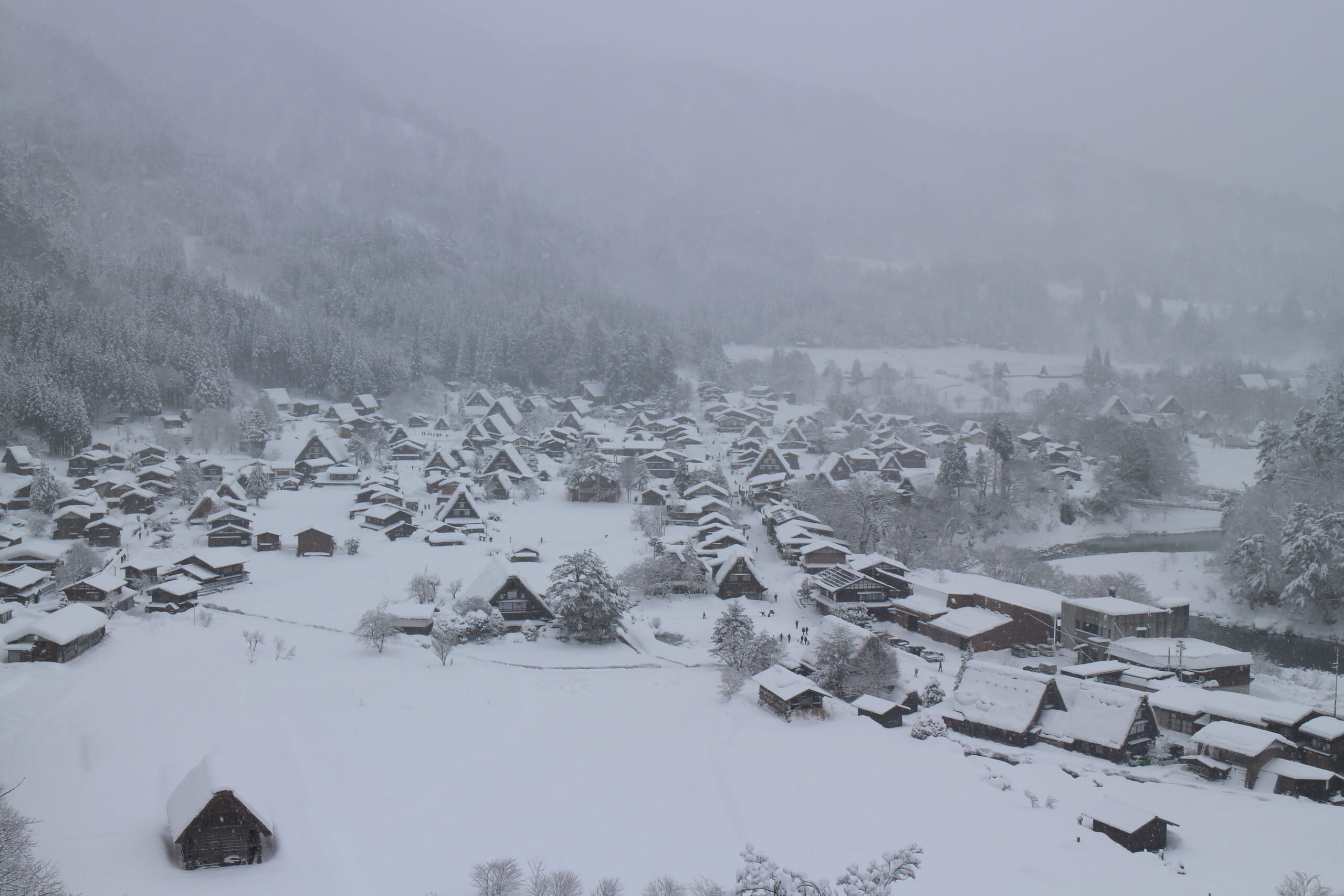
Snow and local instructions determine whether to use a walking route or shuttle. Do not find a way around a closure. If access is difficult, concentrate on the village lanes; snowy roofs and waterways seen from ground level are part of the winter visit too.
Allow roughly three to four hours for a daytime outing
A village walk, an open traditional house and lunch make a workable core. Three to four hours is a suggested itinerary allowance; adjust it for your pace and any entrance queues.
Alternate time outdoors with a building visit or meal to take breaks from the cold. Leave enough time for the walk back to the bus stop rather than rushing to squeeze in one more sight.
Footwear and a small bag make a difference
Choose waterproof winter shoes with grippy soles. Deep snow and packed paths feel different underfoot; removable traction aids should come off before you enter buildings.
- Wind- and snow-resistant outerwear, with layers underneath.
- Gloves and a hat, including for stops to take photographs.
- One pair of spare socks in case your feet get wet.
- A small bag. Leave large luggage at your lodging where possible and keep your hands free.
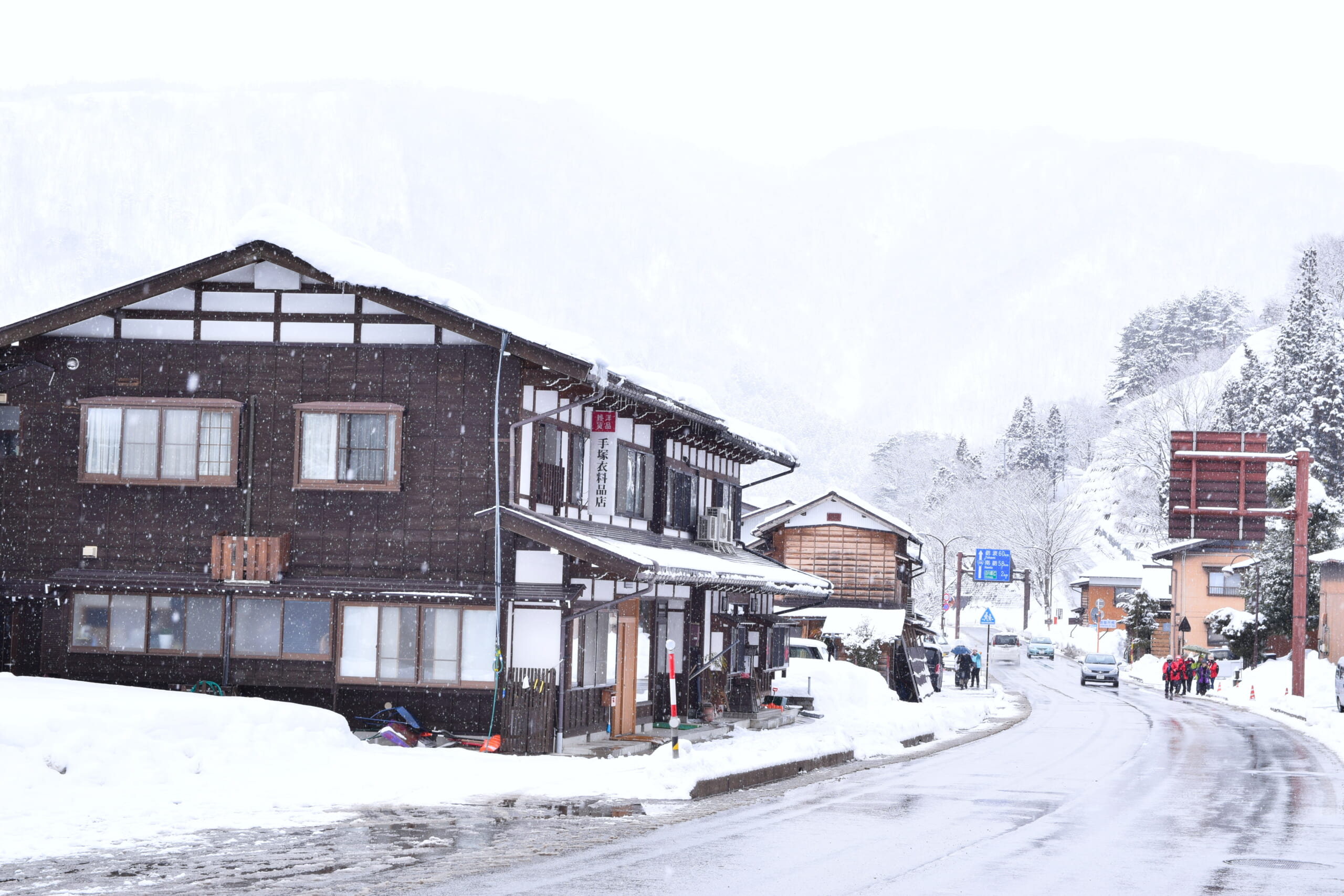
With children or limited mobility, avoid making both the viewpoint and a long walk compulsory. Stay on permitted paths, not doorsteps or fields used as photo spots. Keep clear of eaves where snow may fall from roofs.
For the night view, start with an event reservation
The illuminated winter scene in the opening photograph is an event, not a nightly display. The 2027 light-up requires advance reservations, and viewpoint tickets depend on the participation option. The 2027 event notice distinguishes village entry from viewpoint access: an entry ticket alone does not cover the viewpoint. A daytime bus booking or a room in a neighbouring town covers neither event entitlement.
Waiting until dark and taking a normal late bus home is not a workable plan. Choose one of the reserved arrangements in the official event information, including return transport. If the night view is your priority, settle that reservation before arranging flights and nearby accommodation.
For a daytime visit, fit a warm meal in before your return bus. Leave with time spent in the village as well as a photograph from the viewpoint.
Information checked: October 2, 2026.
Official sources
Photo credits
- Shirakawago.jpg — Jordy Meow, CC BY-SA 3.0 / 2014-02-02 17:54:19.
- Shirakawa in winter; Gifu Prefecture; February 2018 (14).jpg — 雷太, CC BY 2.0 / 2018-02-04 10:53:07.
- Shirakawa-go 20170202-5.jpg — Suicasmo, CC BY-SA 4.0.

.jpg)

Structure and selected guidance updated: October 14, 2026.