Vegetarian and Vegan Food in Hakone: Ask Before Booking Your Ryokan
For vegetarian or vegan meals in Hakone, settle the food arrangements before confirming your ryokan. A vegetable-led Japanese meal can still contain fish stock, eggs or dairy. List the ingredients you avoid so the property can give a meaningful answer.
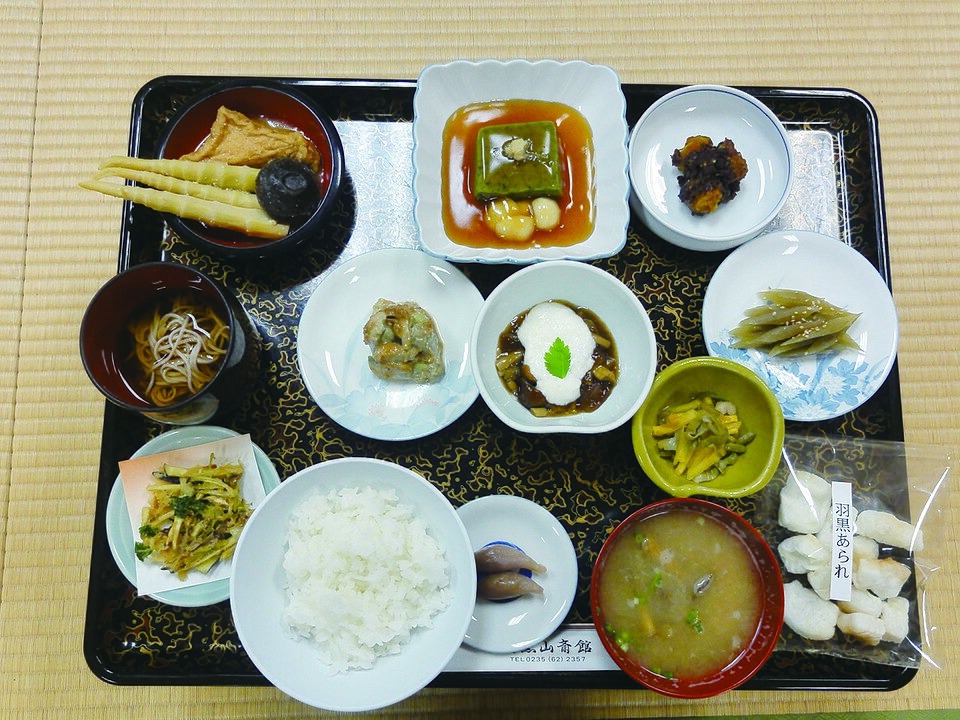
The opening photograph shows a shojin ryori meal as a general example, not a meal served at Kinnotake Tonosawa.
Start with the ryokan’s published policy
Kinnotake Tonosawa is one property that publishes dietary arrangements. It asks guests requesting vegan, vegetarian or pescatarian meals to contact it through the inquiry form at least three days before the stay. That is this property’s policy, not a rule shared by all Hakone ryokan.
The same guidance says it cannot provide meals excluding miso and soy sauce. The property also does not accommodate children under 12, so it is not a family option for younger children. Check the guest-age and accommodation conditions alongside the food policy.
“No meat” may not tell the kitchen enough
Specify whether you avoid meat, seafood, fish stock, eggs and dairy. Distinguish a dietary or religious restriction from an allergy. With a severe allergy, discuss preparation equipment and cross-contact as well as the ingredients.
A message such as “I do not eat meat or fish, including fish stock. Eggs and dairy are fine” gives more detail than “vegetarian” alone. For a vegan request, explicitly include eggs and dairy among the exclusions.
Eating out: read beyond the appearance of the dish
Tofu and soba may look promising, but the broth and dough matter. Hatsuhana in Hakone-Yumoto, for example, describes soba made with Japanese yam and egg. Do not assume a noodle dish is vegan simply because it is soba.
For a stay without dinner, find a suitable restaurant and a return route before leaving. A lunch option may not open at night. Choosing accommodation and food together works better than crossing into another mountain district just to find a meal.
If you bring a snack you can eat, read its ingredient label and follow the accommodation’s rules on outside food and eating areas. Receiving a clear meal response before committing to the room leaves more time for the scenery and onsen once you arrive.
Information checked: October 6, 2026.
Official information
Photo credits
- Photo 1 — Mimissu / CC BY-SA 4.0. Resized for publication.
- Photo 2 — Akonnchiroll / CC BY-SA 4.0. Resized for publication.

