Walking Yoshino’s cherry blossoms: choosing a route from Shimo to Kami Senbon
On Mount Yoshino, peak blossom moves uphill. Flowers usually open from early to late April in the order Shimo, Naka, Kami and Oku Senbon, so the whole mountain is not at its best on one day. If the lower areas are blooming, aim as far as Naka Senbon. If the upper areas are at their peak and you have time and energy, continue to Kami Senbon. Let that day’s blossoms guide your route.
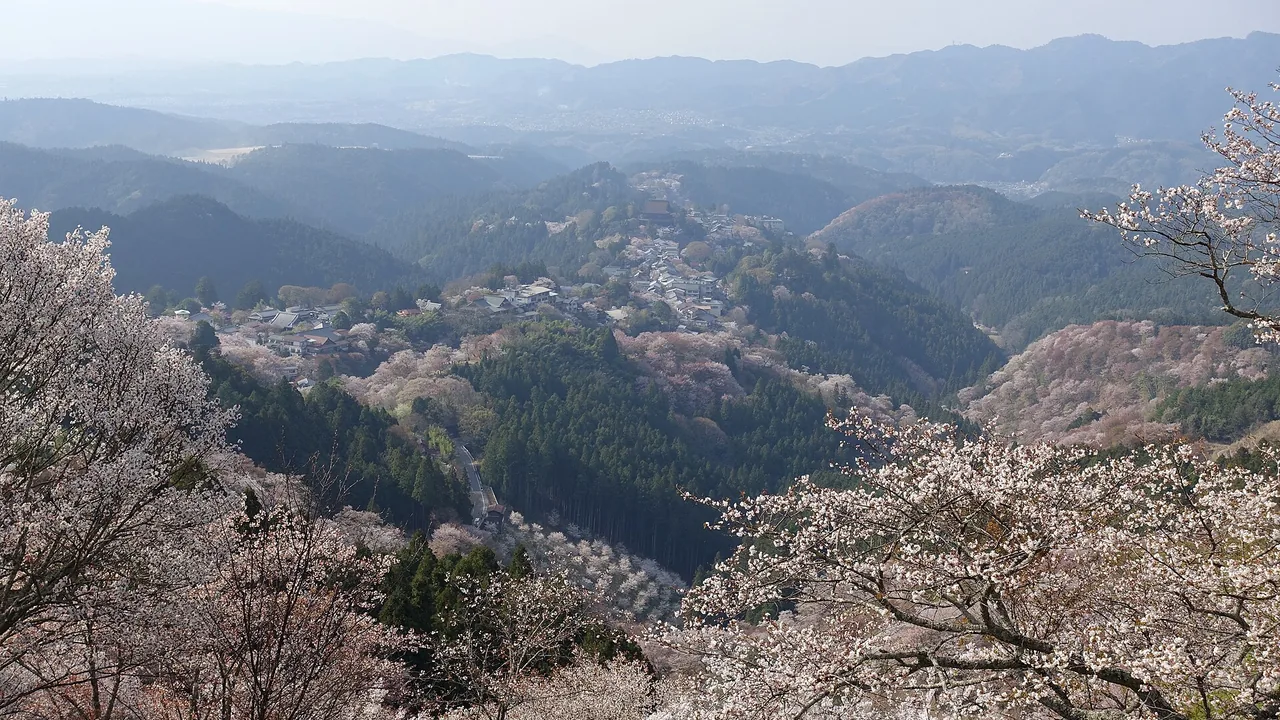
Start with Zaodo and the Yoshimizu Shrine area
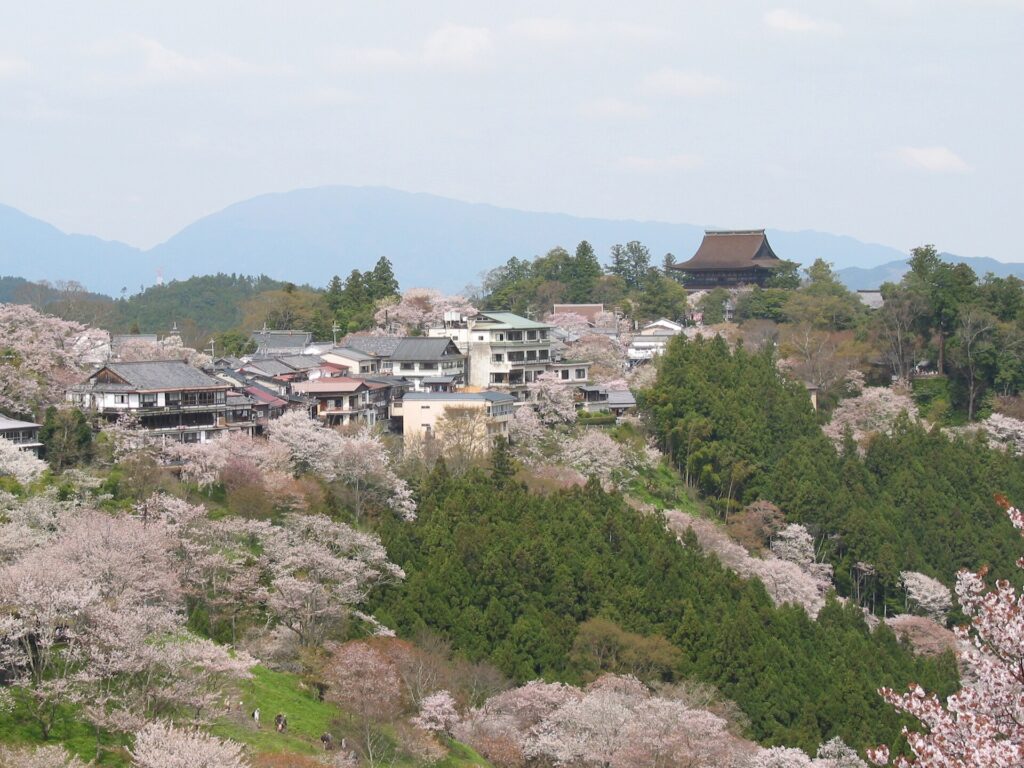
From Kintetsu Yoshino Station, head uphill towards the ropeway’s Yoshinoyama Station and base your walk around Kinpusen-ji’s Zaodo hall and Yoshimizu Shrine. Shimo Senbon is nearer the station; Naka Senbon combines temples and views; Kami Senbon involves more climbing. Before aiming for the upper blossoms, consider whether you can manage the slopes in both directions.
- Official walking-map estimates: Kintetsu Yoshino Station to ropeway Yoshinoyama Station, 20 minutes; from there to Zaodo, 15 minutes; Zaodo to Yoshimizu Shrine, 10 minutes.
- Towards Kami Senbon: Zaodo to Katte Shrine, 10 minutes; Katte Shrine to Yoshino Mikumari Shrine, 50 minutes. These are walking times, excluding visits, photography, meals and queues.
Pause near Yoshimizu Shrine to check the time and how tired you feel. Allow for the descent to the station and boarding queues; turn back there if time is tight. Check the sections on the official sightseeing maps.
Using transport uphill? Plan the return too
The ropeway and extra buses may run different schedules during blossom season. An outward service does not necessarily mean you can return from the same place. Check that year’s operating dates, boarding points and return services, allowing for queues. Even if you plan to ride uphill and walk down, confirm that the service is running first.
Paved roads still involve long slopes, and descending can strain the knees. Feeling energetic on the climb does not remove the walk back. Take breaks; if pain or fatigue develops, consider turning around rather than pressing on.
What to bring for a blossom walk
- Comfortable, familiar shoes and a layer you can add or remove
- Drinking water and rain gear
- Your return train time and the walking time to the station
- An alternative rest stop if your first choice is crowded
People converge on Yoshino Station in the evening. If taking a limited express, check how to secure a seat and add queueing time to the journey back.
Shorten the route in rain or if walking is difficult
Slopes become slippery in rain, and umbrellas can collide in crowds. Choose a shorter area and prioritise transport and boarding points over viewpoints. Stay away from tree roots, do not touch branches, and avoid lengthy photo stops in paths. If also visiting Nara, read advice for its temples and shrines.
Information last checked: September 22, 2026
Official sources: Yoshinoyama Tourism Association: blossom updates / Access
Last edited: September 28, 2026. Official sources checked for this update: Yoshinoyama Tourism Association: sightseeing maps / Walking-time map
Photo credits
Cherry blossoms covering the slopes of Mount Yoshino — Luka Peternel · Photo source · CC BY-SA 4.0 (Display may use cropping or brightness adjustments.)

Kinpusen-ji’s Zaodo hall seen through cherry blossoms on Mount Yoshino — Tawashi2006 · Photo source · CC BY 2.1 jp (Display may use cropping or brightness adjustments.)
