Buying Kairo in Japan: Stick-on or Pocket Hand Warmers?
Waiting for a bus or walking around evening illuminations can feel much colder than the rest of a day’s sightseeing. At a Japanese shop, look for the words 貼る (stick-on) and 貼らない (non-adhesive) on disposable warmers, or kairo. Which one you buy depends on whether you want warmth for your hands or a patch attached to your clothing.
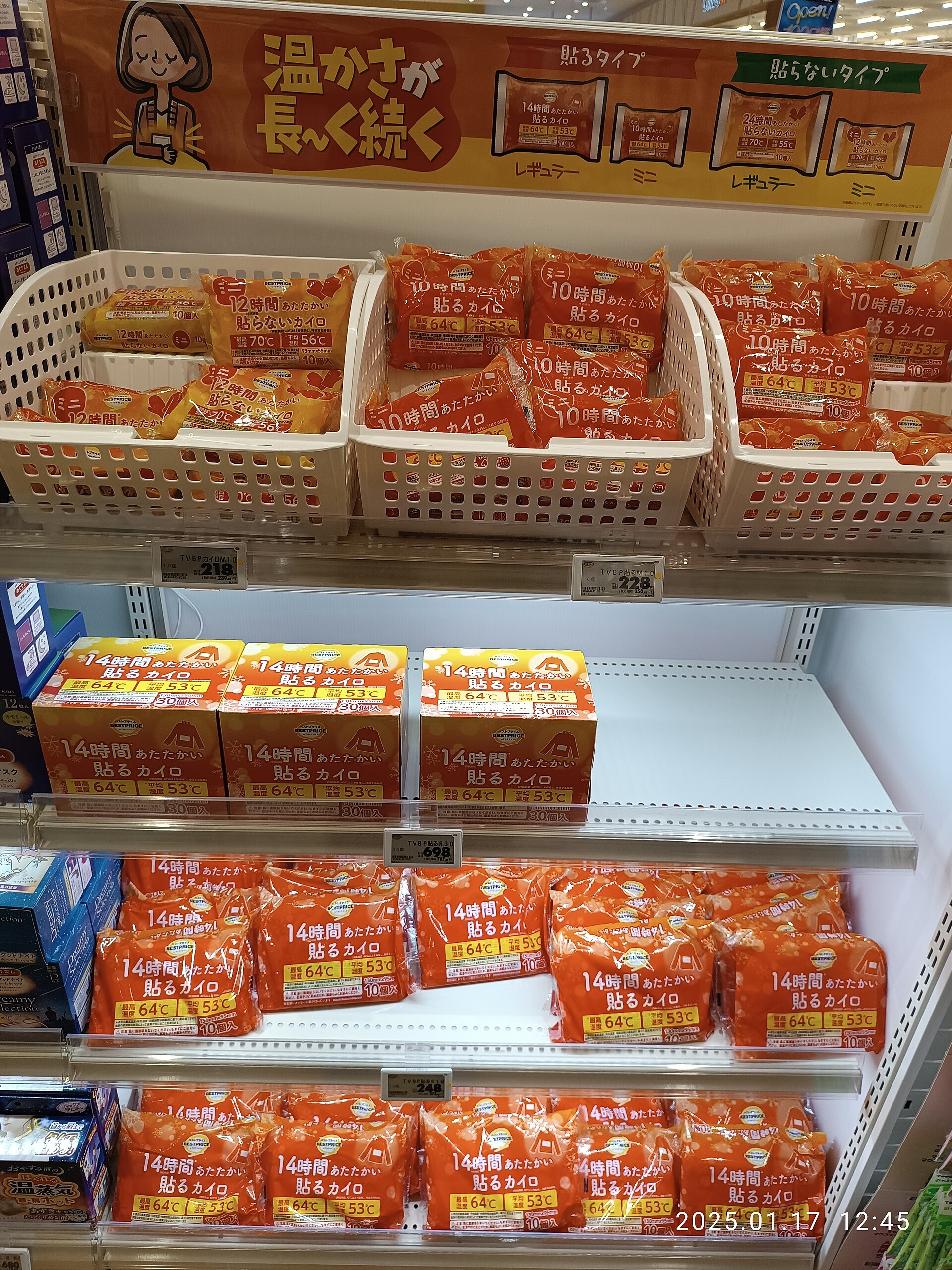
This guide covers air-activated disposable pouches. Rechargeable warmers and fuel-filled models work differently and have different flight rules.
Read these two labels first
- 貼らない · haranai: a non-adhesive warmer. Kobayashi’s instructions say to use it over clothing or wrapped in cloth, without direct contact with skin.
- 貼る / はる · haru: an adhesive warmer. Peel off the backing and attach it to clothing, not bare skin.
Packages marked くつ用 or くつ下用 are made for shoes or socks. Choose a product for that purpose rather than putting an ordinary body patch inside your shoe. If you simply want something to warm your hands on an outing, start by looking at the non-adhesive packs.
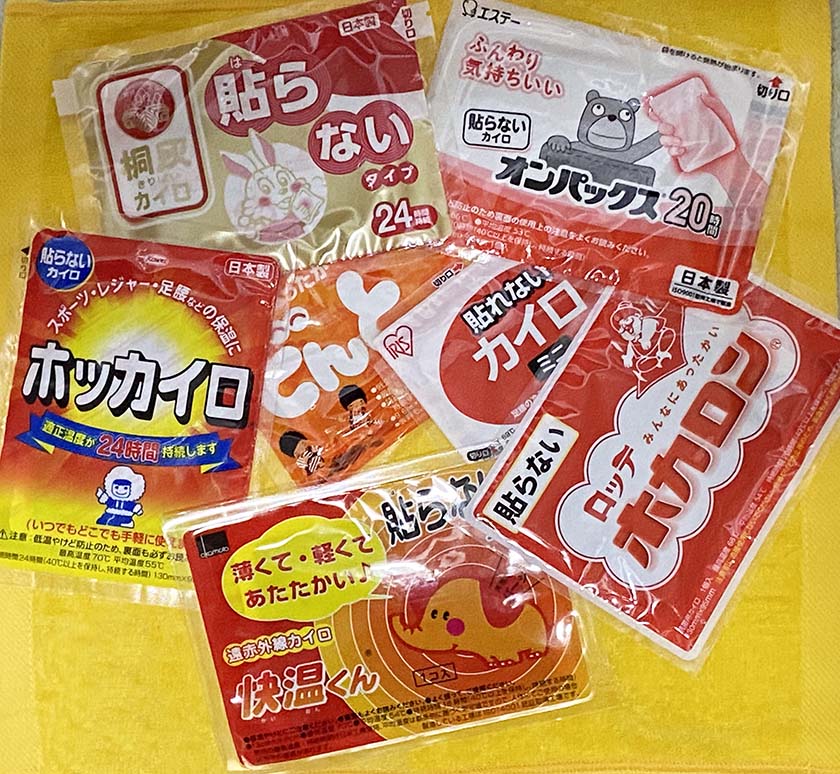
Even on a Japanese-only packet, the ない at the end of 貼らない helps distinguish the two. Then compare the pack count, size and stated duration. For example, Kiribai lists 14 hours for its regular adhesive warmer and 10 for the mini; its non-adhesive versions list 24 and 12 hours respectively. Those are product-specific measurements under test conditions, not a duration shared by every warmer on the shelf.
Buy for the days you will be outdoors
Look in drugstores, supermarkets and convenience stores. If you cannot find the seasonal shelf, showing the words 使い捨てカイロ, “disposable warmer,” helps staff understand what you need. Pick some up during the day if you plan to use them that evening; stock depends on the shop.
Compare the total price with the number inside and whether they are regular or mini size. A large box is not automatically the best purchase for a short trip. If only one evening of a two-night stay will be spent outdoors, a small pack saves you carrying the rest around.
Leave each individual packet sealed until you need it. Opening one as you head out for a cold evening makes more sense than opening the whole supply before a day spent mostly inside.
For a trip into snow, plan footwear and transport alongside the warmers. Our winter Shirakawa-go guide covers clothing and access for that destination.
Keep the warmth off bare skin
Attach an adhesive pack without kneading it. For its non-adhesive Kiribai warmer, Kobayashi specifies a few gentle shakes after opening. Follow the instructions on the product you buy rather than rubbing or kneading it to make it hotter.
Do not use ordinary disposable warmers while sleeping, under bedding or together with other heaters. Prolonged contact can cause a low-temperature burn even when the heat does not initially feel excessive. Keep the pouch off bare skin, avoid pressure over an adhesive patch, and remove it if it feels too hot. Stop using it and seek medical advice if burn symptoms appear.
Kobayashi advises people with impaired heat sensation or circulation, including those affected by diabetes, not to use these products. Children and anyone unable to remove a warmer themselves need particular care. Keep the packet so its safety instructions remain available.
Taking unused packs home
Kobayashi says its disposable warmers can travel in either cabin or checked baggage. IBEX Airlines also allows single-use disposable warmers in the cabin, but prohibits oil-filled warmers in both cabin and checked bags. Do not apply the disposable-pouch rule to a different kind of device. For an international or connecting flight, read the baggage guidance of the airlines you will use.
Dispose of used pouches according to local waste sorting. Your accommodation can tell you which bin to use. Put the next day’s supply in your small bag before leaving: you can then take one out without unpacking your suitcase when the cold catches up with you.
Sources and photography
Information checked: November 3, 2026.
- Kobayashi: Kiribai adhesive warmers
- Kobayashi: non-adhesive warmers
- Kobayashi: using and disposing of warmers
- Kobayashi: disposable warmers on flights
- IBEX Airlines: baggage FAQ
- Naha Mama Pavilionz · CC0 · Resized for display only.
- Mikanumuyounatori · CC BY-SA 4.0 · Resized for display only.

