Your First Soba Order: Cold Noodles or a Hot Bowl?
A soba menu can feel like a string of unfamiliar variations. For a first order, choose chilled noodles if you want to focus on the noodles themselves, or kake soba if you would like a warm bowl of broth. That gives the meal a shape before you consider toppings.
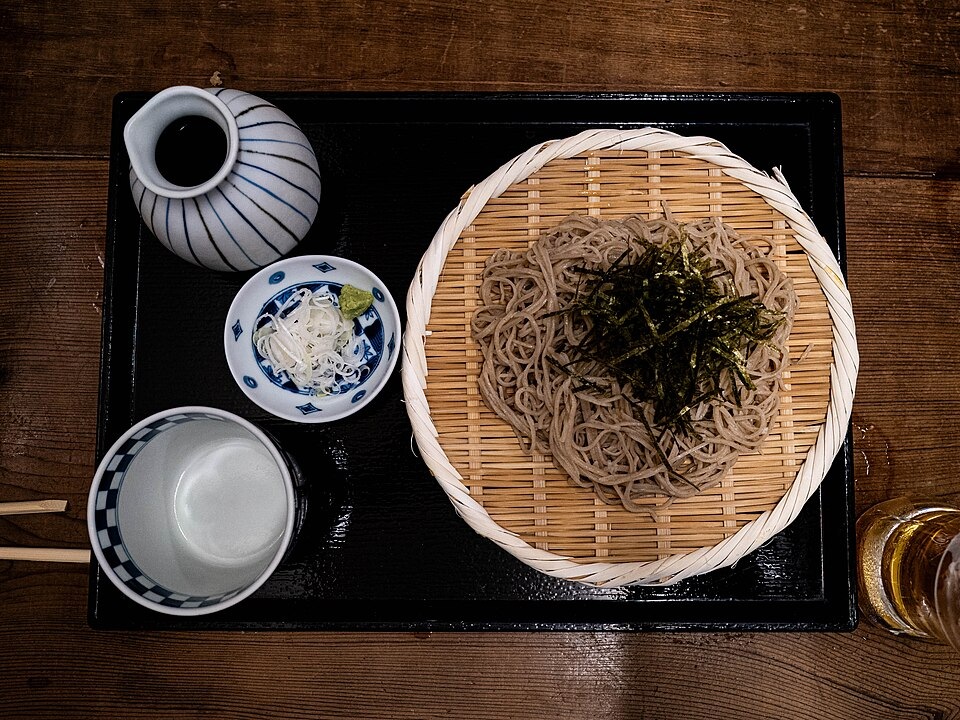
Chilled soba comes with dipping sauce
| Menu word | What arrives | How to eat it |
|---|---|---|
| ざる / zaru | Cold noodles with separate dipping sauce; toppings such as nori depend on the shop. | Dip a small portion at a time. |
| もり / mori | Cold noodles with separate sauce. The distinction from zaru follows the shop’s menu. | Choose the portion and any accompanying dishes. |
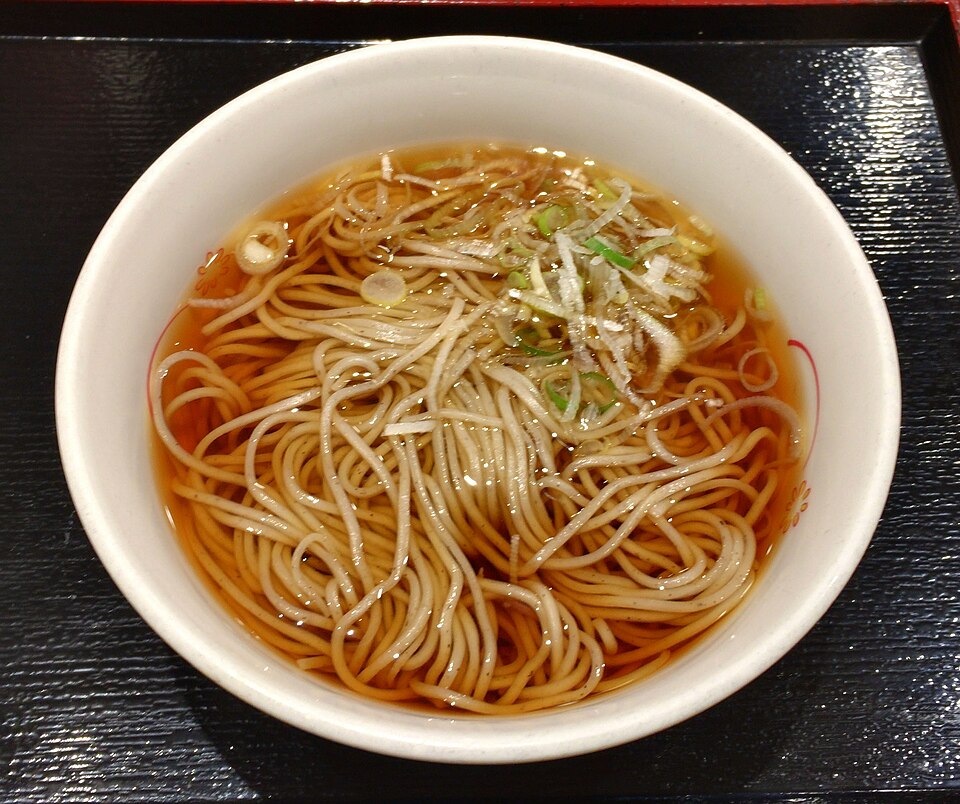
| かけ / kake | Noodles already in hot broth. | Eat the noodles from the bowl with the broth. |
Zaru soba (ざるそば) generally arrives with noodles and sauce served separately. Lift a small portion and dip it as you eat. Do not pour the sauce over the entire tray; dipping each bite lets you control its strength.
You do not have to use all the spring onion or wasabi immediately. Taste a bite first, then add what you like. Regional names and condiments vary: Nagano also has preparations using radish or miso. An unfamiliar name can be a reason to read the shop’s explanation, rather than an obstacle to ordering.
If a pot of sobayu arrives after the noodles
Sobayu (そば湯) is the hot water used to cook soba. Ukiya’s restaurant guide explains that, when it is served after cold soba, you can add some to the dipping sauce left in your small cup to make a warm drink. Add a little at a time to suit your taste. It is not a second dipping sauce, and not every restaurant serves it; ask the staff if you are unsure what the pot contains.
Kake soba (かけそば): noodles in hot broth
With hot soba, the noodles arrive in the broth. You eat from the bowl rather than dipping them into a separate cup. After a wet walk, that may be the lunch you want.
Tempura and other toppings give you more options, but there is no need to build a complicated order. Decide whether this is a light lunch or a fuller meal, then look at toppings and sets. Whether tempura comes on the noodles or on a separate plate depends on the menu.
Buckwheat noodles do not automatically mean wheat-free or vegetarian
Some noodles use only buckwheat; others combine it with wheat. Sauce ingredients also vary. Appearance is not enough to establish that a dish is wheat-free or suitable for a vegetarian diet.
If you have a food allergy, discuss both ingredients and shared preparation equipment before ordering. Japan’s Consumer Affairs Agency highlights the possibility of unintended allergen contact in restaurants. Prepare your allergy explanation before lunch so the conversation can be specific.
You do not need to master every convention. Start with the meal you want: a warm bowl, or chilled noodles to dip at your own pace.
Practical visitor information checked: 5 October 2026.
Information checked: October 3, 2026.
Official sources
Photo credits
- 三咲のざるそば (54178345476).jpg — Ryohei Noda, CC BY 2.0 / 2024-09-05 18:43:45. Resized only.
- Kakesoba of Tachiguisoba.jpg — 毒島みるく, CC0 / 2019-02-05. Resized only.
.jpg)

Structure and selected guidance updated: October 13, 2026.