Hakone Yosegi in Hatajuku: Puzzle Boxes and a ¥1,600 Coaster Workshop
For a Hakone souvenir you will want to pick up again at home, look at yosegi marquetry. Geometric patterns run across a small box, their variety coming from the colours of the wood itself. In Hatajuku, you can also make a coaster rather than simply buy a finished piece.
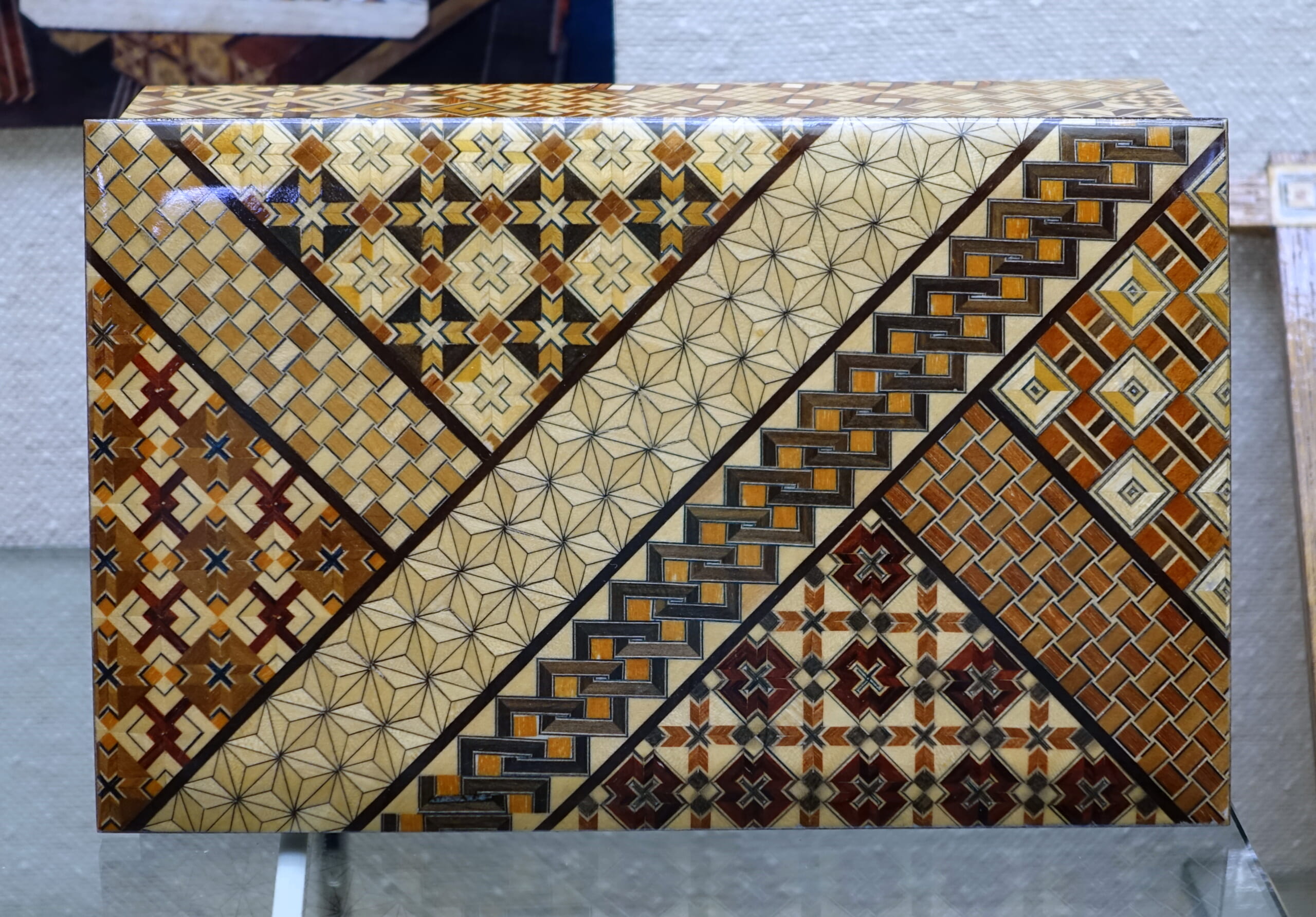
The pattern is made from wood, not painted on
Yosegi colours generally come from differences between woods. Makers combine them into patterns. In the zuku technique, a thin sheet is shaved off and applied to an object such as a box; muku uses the assembled solid block itself.
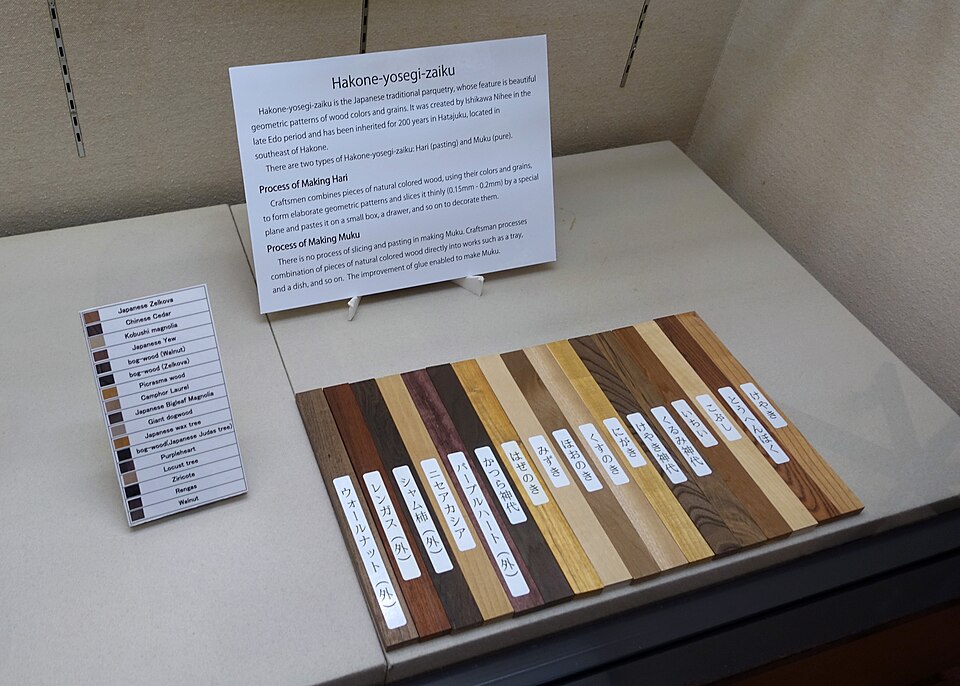
Zuku is not automatically lower quality, nor is every muku piece a luxury item. Compare weight, shape, fine detail and how you would use it. Though this is a Hakone craft, not all the timber comes from Hakone: woods from Japan and overseas contribute their different colours.
A 50-minute coaster workshop at Hatajuku Yosegi Kaikan
The current workshop costs ¥1,600 per person including tax and takes around 50 minutes. Arrange 18 wooden pieces, decide on a pattern, then glue and finish the coaster. You take it home that day, without adding a collection visit later in the trip.
After registration and payment, collect the kit and settle on an arrangement before gluing. The same pieces can produce quite different impressions. The boxes and wood displays in the photographs illustrate the craft; the workshop makes a coaster.
Reservations take priority and can be made online or by telephone at 0460-85-8170. Walk-ins may join if space is available. If the workshop is the reason for coming, reserve a slot before building the rest of the day around it.
Yosegi describes the wood pattern; himitsubako describes the puzzle
A yosegi-patterned object does not have to be a puzzle box: the coaster workshop is one example. If you want a box with a concealed opening sequence, ask specifically for a himitsubako and have the shop demonstrate it. If you mainly want to enjoy the wood pattern every day, a coaster or another non-puzzle object may suit you better.
Choose a puzzle box for its opening sequence, too
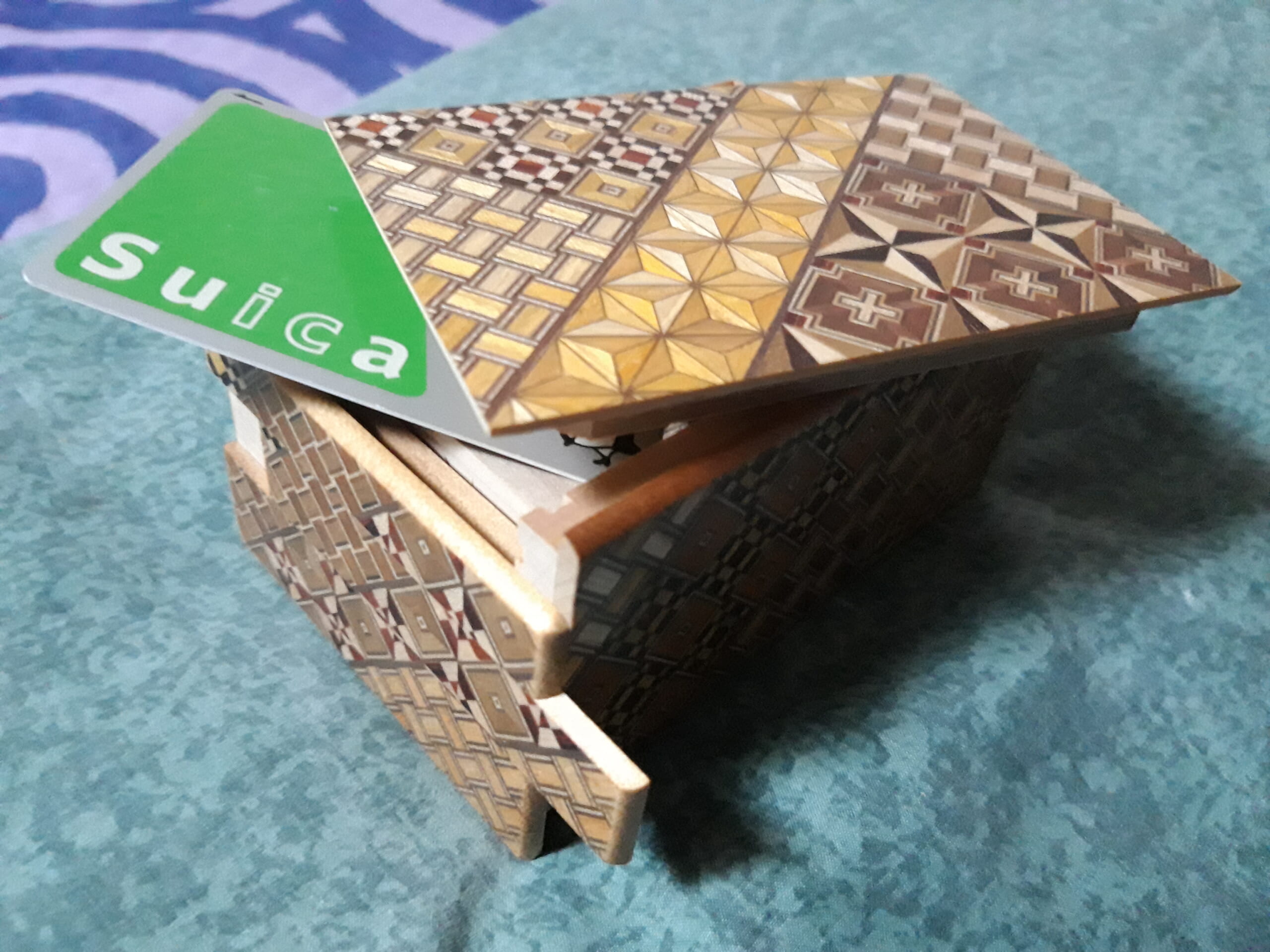
A himitsubako puzzle box opens by moving its parts in a set sequence. Alongside the pattern, consider the number of moves, the clarity of the instructions and the person receiving it. The most complex box is not necessarily the most enjoyable first souvenir.
Do not force a box that will not open. Ask the shop how to explain its mechanism, and keep the instructions separately so you can help the recipient later. Wrap it with cushioning and place it where other luggage will not press hard against it.
Plan around Tuesday and Thursday closures
Hatajuku Yosegi Kaikan opens from 10am to 4pm and normally closes on Tuesdays and Thursdays, with different arrangements on public holidays and additional New Year closures. It is about two minutes on foot from Honjin-ato bus stop on the K route between Hakone-Yumoto and Moto-Hakone.
Allow the workshop’s roughly 50 minutes, time to browse and the wait for the return bus. If you also want the Old Tokaido and Amazake Chaya, split the journey with buses rather than walking every link. Even choosing a small souvenir can take longer than expected when the patterns draw you in.
Information checked: October 5, 2026.
Official information
Photo credits
- Hakone Yosegi Zaiku box – Hakone Checkpoint Exhibition Hall – Hakone no Seki (barrier station) – Hakone, Japan – DSC06052.jpg — Daderot / CC0 / 2016-09-03 23:22:30. Resized for display; image content unchanged.
- Hakone Yosegi Zaiku display – Hakone Checkpoint Exhibition Hall – Hakone no Seki (barrier station) – Hakone, Japan – DSC06050.jpg — Daderot / CC0 / 2016-09-03 23:22:07. Resized for display; image content unchanged.
- Japanese puzzle box (yosegi) – opened.jpg — Eugene Alvin Villar ( seav ) / CC BY-SA 4.0 / 2021-05-16 19:11:12. Resized for display; image content unchanged.
_-_Hakone,_Japan_-_DSC06052.jpg)
_-_Hakone,_Japan_-_DSC06050.jpg)
_-_opened.jpg)
Structure and selected guidance updated: October 15, 2026.