Your First Conveyor-Belt Sushi Meal: Ordering, Plate Prices and Paying
Some restaurants send plates past on a conveyor belt; others deliver only the sushi you order. Even under the same name, conveyor-belt sushi does not always start with the same first step.
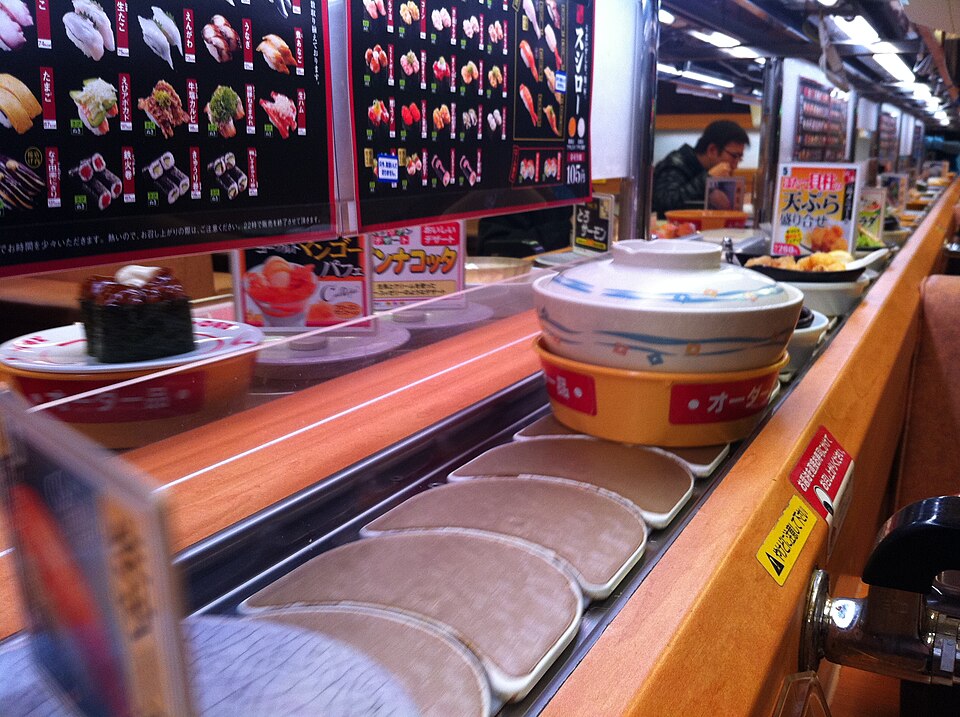
Can I take this plate?
Is that somebody else’s order?
Does a different plate colour mean a different price?
It looks more casual than a conventional sushi restaurant, yet the first few minutes can be surprisingly confusing.
Check in before choosing a seat
At a restaurant with an entrance check-in system, follow its instructions even if some seats look empty. A reservation or waiting number is not permission to choose a table yourself.
For example, Kura Sushi’s first-visit guide shows check-in followed by a seating guide. Keep your check-in details, wait for the invitation to proceed, and use the seat information you are given. This is a Kura example; other restaurants may have staff handle the process.
If the screen or ticket is unclear, show it to a staff member and ask, “Could you show me my seat?” Check which seat is yours before using its ordering screen or taking a plate marked for a particular seat.
Passing plates and orders sent to your seat
At many restaurants, sushi travelling on the regular conveyor belt is available for you to take.
More restaurants also let you order on a touchscreen and deliver the food to your seat on a dedicated lane.
A plate marked with a seat number or as an ordered item may belong to another customer.
Before taking your first plate, spend a moment looking at the lane and the touchscreen. If the seating instructions do not explain it clearly, ask a staff member before taking sushi.
Plate colours can mean different prices
Conveyor-belt sushi may suggest a single price for everything, but that is not always how it works.
Some restaurants price plates by colour; others display each item’s price on the touchscreen.
Once seated, check the price list. It gives you a useful idea of what the bill will be.
Once you have taken a plate, do not return it to the conveyor belt, even if you change your mind.
For a fish you are unsure about, it is easier to check the name and price on the touchscreen and order from there.
A screen with photographs also helps when you do not recognise the fish names.
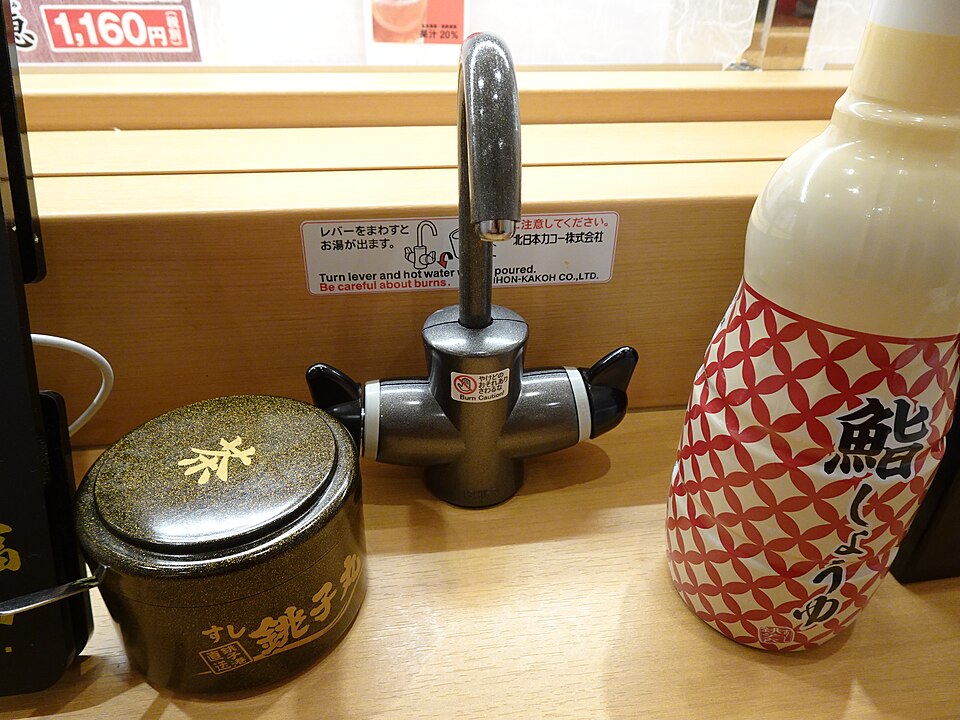
Tea and ginger are often self-service
Some seats have powdered tea or tea bags, cups and a hot-water dispenser. The water is hot, so position the cup securely before using it. Ask a staff member if you are unsure how the dispenser works.
Pickled ginger and soy sauce may also be on the table.
Some restaurants now provide these on request, so follow the signs in front of you rather than assuming everything is there to help yourself to.
The plates, the bill and your budget
Staff may count your plates, the system may calculate the total automatically, or you may put empty plates into a slot.
Before gathering up your plates and moving them elsewhere, check the touchscreen for a checkout button.
If you are unsure, call a staff member and they will show you what to do.
A series of seasonal specials or higher-priced fish can make the bill climb faster than expected.
Decide roughly what you want to spend per person, then choose what you like while checking the prices.
You do not have to stick to the cheapest plates.
Try one plate of a fish you rarely eat, or add a more expensive choice. Small orders make it easy to try something unfamiliar without committing to a whole meal.
For related planning, see travelling in Japan with food allergies and when to reserve a restaurant.
Official information before you go
Information last checked and edited: September 30, 2026. Prices, services and opening hours may change. Follow official guidance for your travel date and local signs.
Photo credits
- Sushi plates passing along a conveyor beside the counter: Travis Sanders / Photo source / CC BY 2.0. Photographed: 2010-12-07 21:24. Resized for display only.
- Tea cups and a hot-water dispenser on a sushi restaurant counter: RuinDig/Yuki Uchida / Photo source / CC BY 4.0. Photographed: 2020-12-12 16:06:55. Resized for display only.
.jpg)

Structure and selected guidance updated: October 10, 2026.