Staying at a Koyasan Temple: Meals, Morning Worship and Getting There
A shukubo is accommodation within a Buddhist temple. At Koyasan, an overnight stay can include shojin ryori meals and morning worship. Rather than arriving late as you might at a city hotel, plan around dinner and leave room for the following morning.
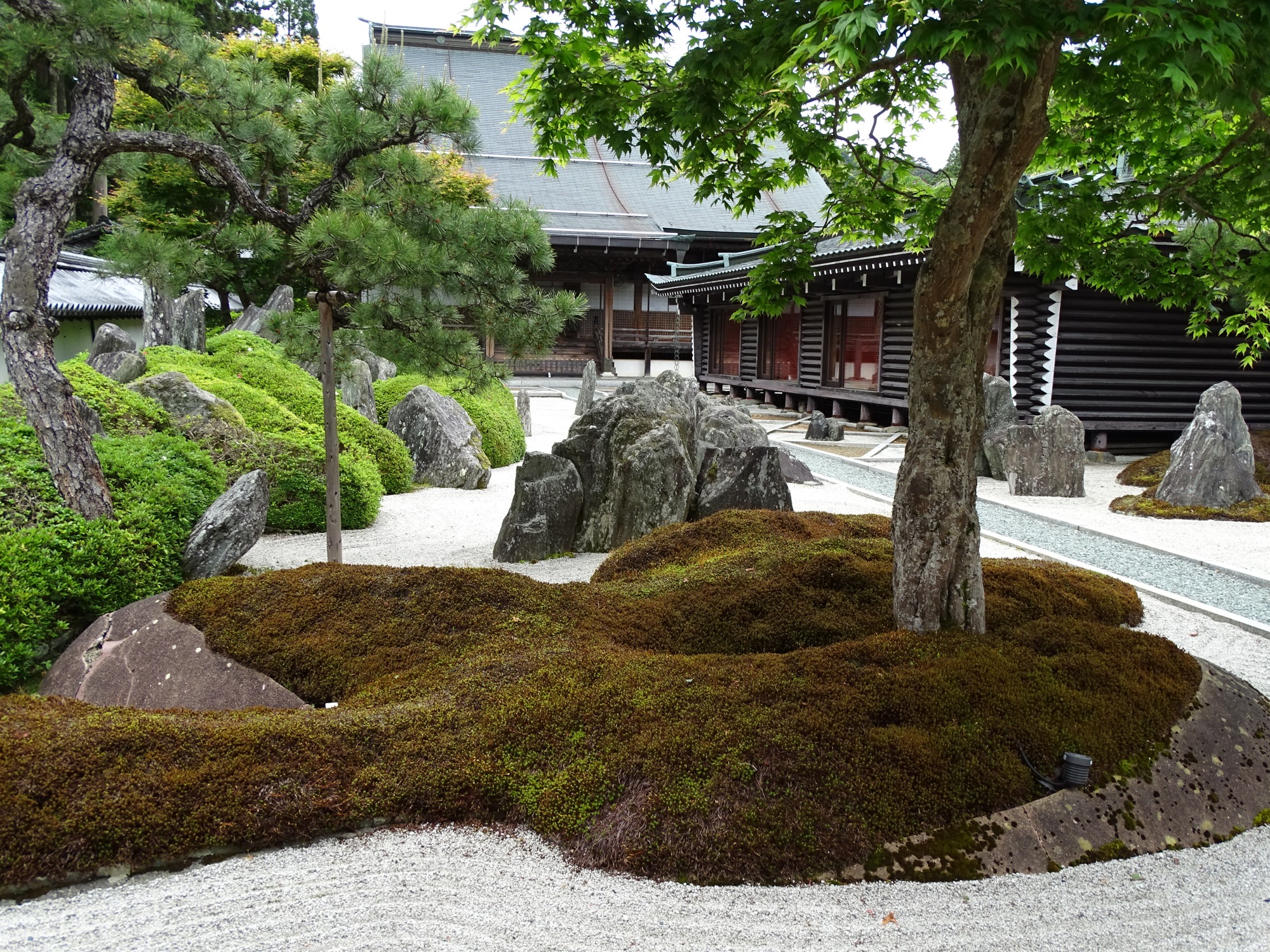
Garden views, private bathrooms, shared baths and dining arrangements vary considerably. Attractive photographs are a starting point; the room and meal details are what make the stay work.
Book the room, meals and morning together
Wakayama’s tourism information describes more than 50 temples accepting overnight visitors in Koyasan. Start with what matters to you: a garden, morning worship or particular room facilities.
- Are the bathroom and toilet private or shared?
- Does the plan include dinner, and how late can you arrive?
- Are activities included, or do they need a separate booking?
- Can you have breakfast before your onward departure?
Compare prices for the same date, number of guests, meal plan and room type. Some temples close in winter, so opening dates matter for a cold-season trip.
Koyasan Station is not the temple district
From Namba in Osaka, take the Nankai Koya Line to Gokurakubashi, then the cable car to Koyasan Station. Continue into town by Nankai Rinkan Bus. The station is not in the center of the temple area. Save your accommodation’s nearest bus stop before setting off.
Allow for the bus and final walk, not just the train and cable car, when planning your arrival for dinner. Limited Express Koya services require a seat reservation. To travel lighter, you could send a large suitcase between hotels. If sending it to the temple itself, first arrange acceptance and the delivery date.
Latest check-in is not the dinner time
For example, Ekoin’s accommodation guidance lists check-in from 2pm, a latest check-in of 7pm, and dinner at 5:30pm; guests arriving after dinner time should notify the temple. Do not read the 7pm limit as a promise that dinner will be served whenever you arrive. These are Ekoin’s arrangements, so confirm the dinner and arrival instructions for your booked temple before choosing a train.
Give dinner its own time
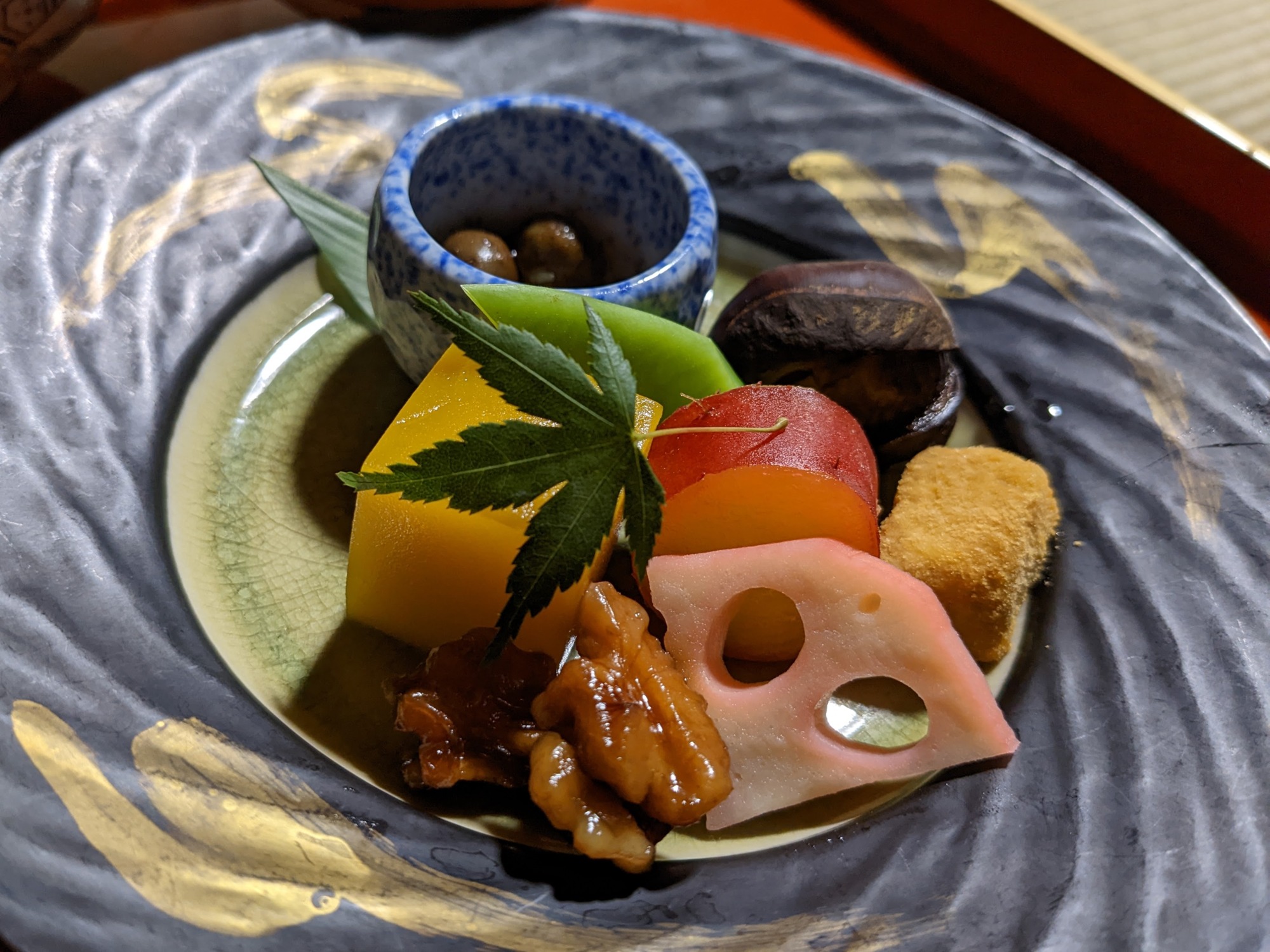
Shojin ryori centers on plant-based ingredients. A succession of small dishes gives the evening a slower pace than another round of sightseeing. The photograph shows an appetizer served at Fukuchi-in; menus vary by temple and season.
Discuss allergies before booking. A plant-based meal can still contain ingredients you need to avoid, and accommodation staff need to explain what they can prepare.
Follow your temple’s bath hours and evening arrangements. If you want a nighttime activity, check how it fits with dinner and bathing before booking it separately.
Keep the morning unhurried
Ekoin, for example, lists morning worship for overnight guests at 7am, followed by a goma fire ritual at 7:30am. Those are Ekoin’s times, not a schedule for every shukubo. Use your booked temple’s instructions to arrange breakfast and checkout.
Approach worship as time spent quietly in a working temple, not a photography session. Follow the instructions about seating and cameras.
An early onward departure can cut short the part of the stay that a day trip misses. Where your itinerary allows, start planning the next journey after breakfast rather than squeezing the temple morning into a rush to leave.
Information checked: October 2, 2026.
Official sources
Photo credits
- Dry Garden of Fukuchiin Temple-Hotel – Koyasan – Japan (47956836043).jpg — Adam Jones from Kelowna, BC, Canada, CC BY-SA 2.0 / Taken on 29 May 2019, 11:15. Resized.
- Fukuchiin shojin ryori appetizer.jpg — Jpatokal, CC BY-SA 4.0 / 2022-09-29 18:23:53. Resized.
.jpg)

Structure and selected guidance updated: October 10, 2026.